Do you want to know what it's like to live on a Caribbean island off the coast of Honduras while diving almost every day, doing a dive master? Check out our newest blog post!
🤿 ⛱️ 🌅
Check it out on our website (link in bio).
@rachstock
@michaelbarbour97
🚨 New blog post about our time on the Caribbean island of Utila in Honduras where we did our dive master training 🤿 and went diving almost every day for over two months! 🐳 🐠
Check it out on our website (link in bio). 😊
Über ein Jahr unterwegs! Was wir alles schon gesehen und erlebt haben ist unglaublich - das wird mir klar wenn ich in meinen Bildern stöbere. Kühle Fjorde, wunderschöne Wüsten, mächtige Flüsse, unendliche Nadelwälder, weite Bergtäler, einsame Strände, laute Städte, mächtige Wale, verspielte Delfine, eindrückliche Haie, gigantische Fischschwärme, farbenfrohe Korallenriffe, präkolumbische Tempelbauten, herzige Affen, tropische Wälder, farbenfrohe Toukane, gemächliche Faultiere, heisse Quellen und so vieles mehr!
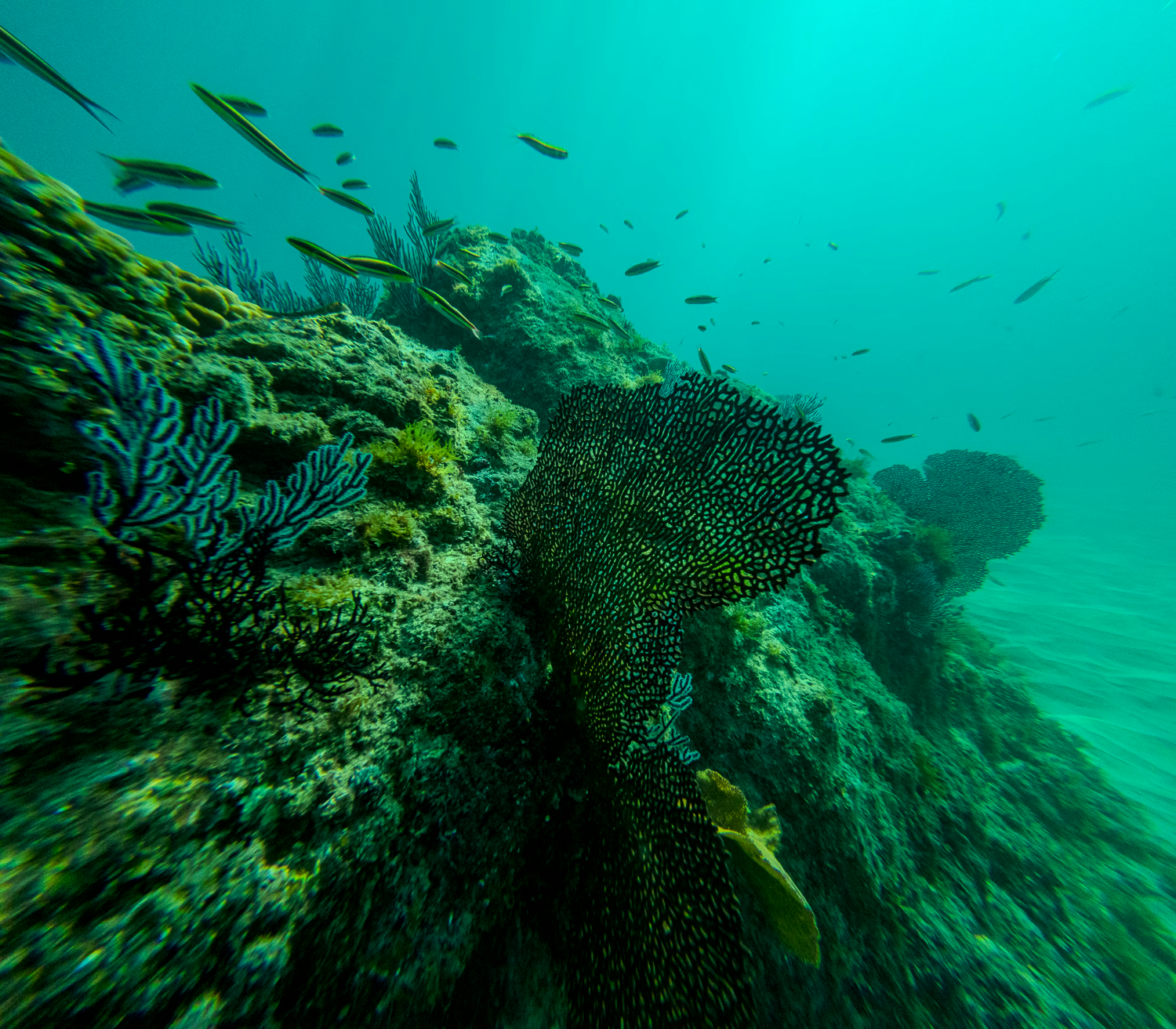
Over the past two months, we’ve been exploring the magical underwater world of Utila. From swimming alongside graceful eagle rays and curious turtles to drifting through vibrant coral gardens, every dive felt like stepping into another world. These photos are just a glimpse of the beauty and wonder we’ve encountered beneath the surface.
Michel recently got an underwater housing for his camera, so many of these moments are part of his first steps into underwater photography. Capturing this hidden world has been a mix of excitement, learning, and discovery — adding a whole new dimension to our time in the water. #diving #scuba #underwaterphotography #utila #utiladivecenter 📷@michelvonloneberga
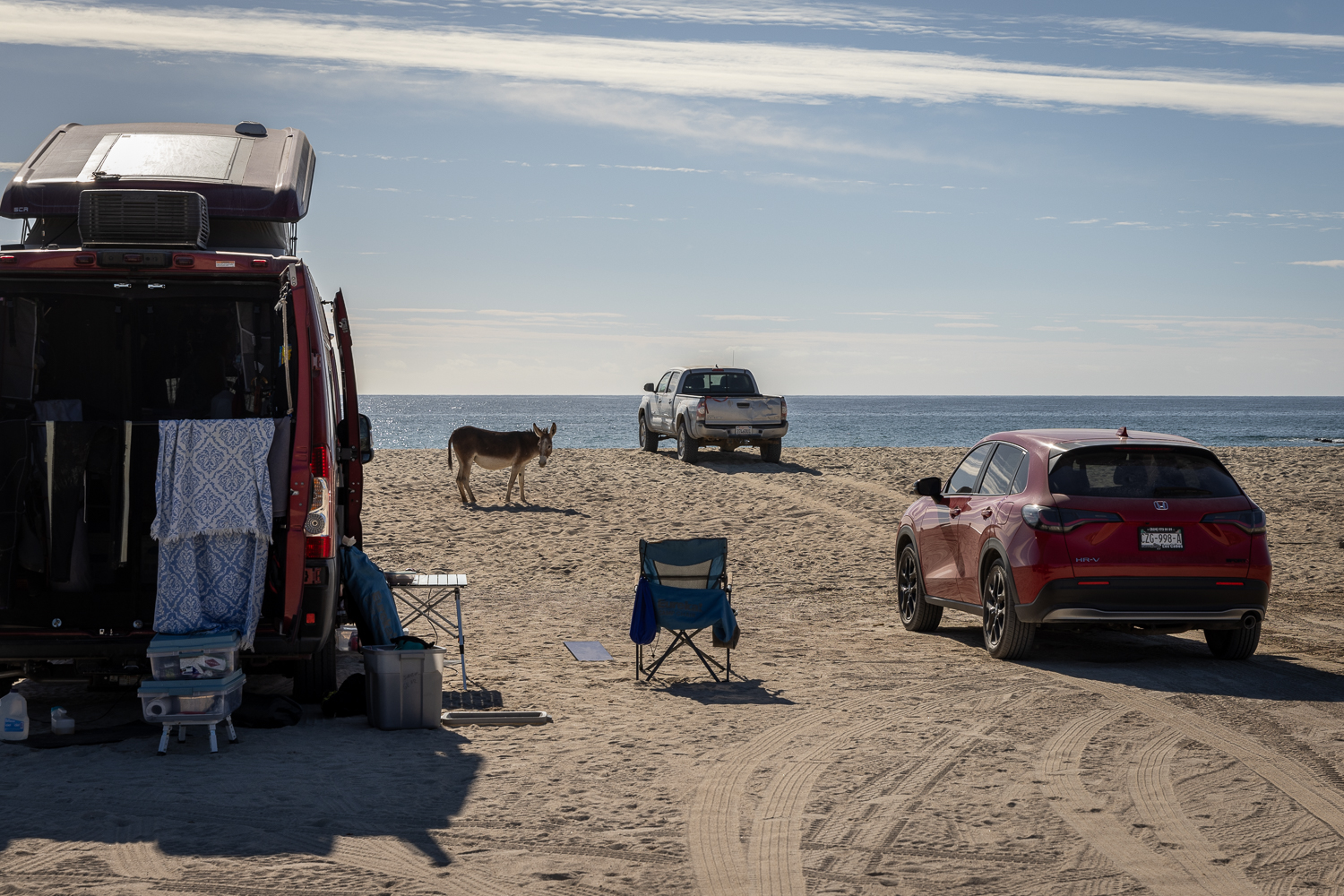
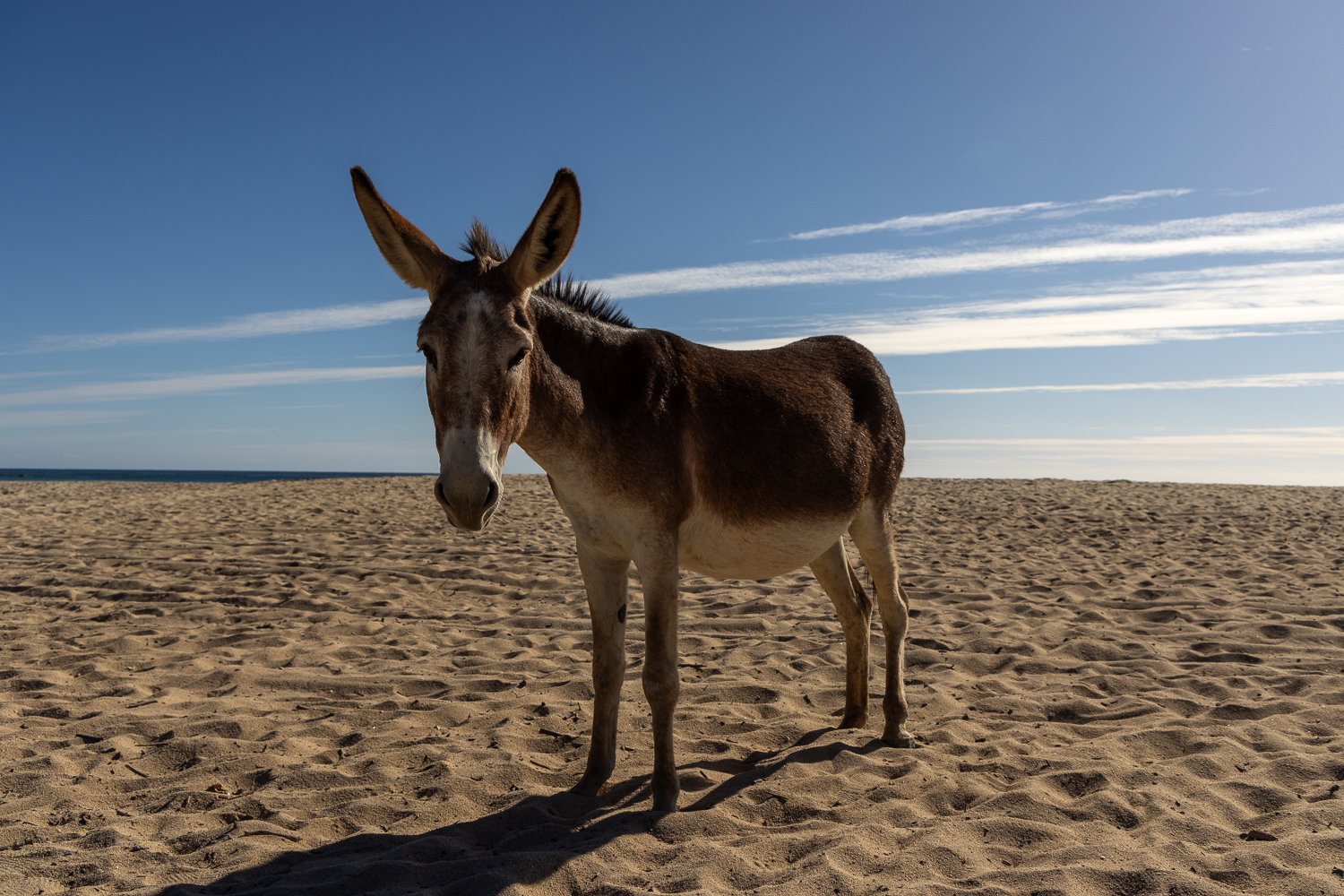
The donkeys of La Fortuna. It's a mystery how they survive under the blasting sun in this desert with little edible vegetation, practically no water and dogs chasing them around every now and then.
Even though they can be slightly annoying when their screams keep you from sleeping at night or when they steal food and wreck your kitchen, they're just kinda cute and one of the reasons why this little seaside village is such a cool place to visit.
#lafortunabcs #donkeys #donkeysofinstagram #beachdonkey
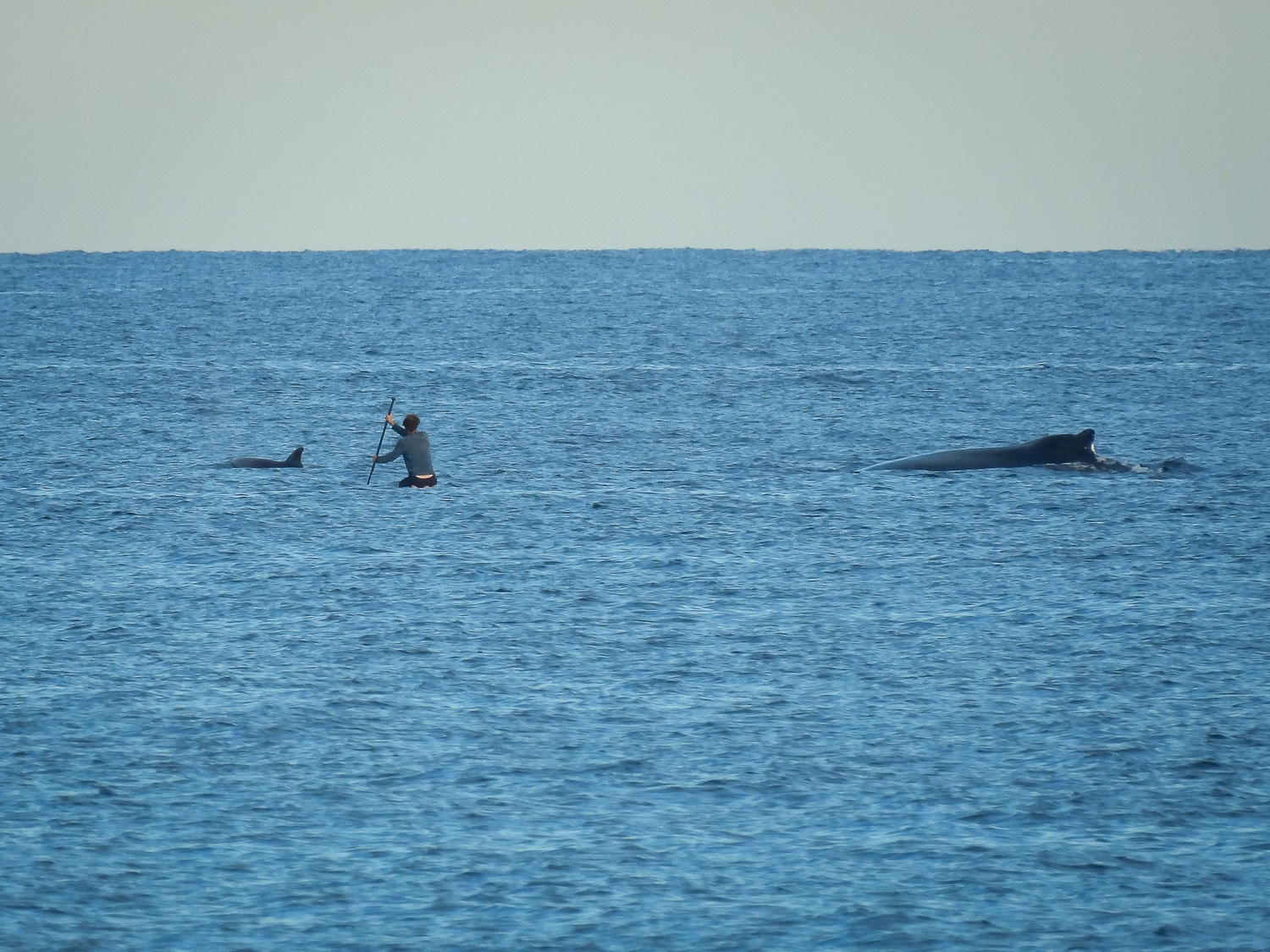
Before arriving in Baja California, I had never seen a whale. Now, I’ve grown accustomed to spotting them from a paddleboard, gliding gracefully right beside me. Yet, every time they come so near, my heart fills with joy. These gentle giants of the ocean have left an unforgettable mark on my soul. #humpbackwhale #whale #bajacalifornia #lafortuna #paddleboarding #wildlife
For the last two months we’ve been enjoying the Baja Station including its Jams. Every Sunday, this usually quiet spot turns into a buzzing gathering place as musicians and music lovers make their way to Cabo del Este. The night comes alive with great live music, cold drinks, and a laid-back, friendly atmosphere that keeps everyone coming back for more. #bajacalifornia #lafortuna #sundayjam #livemusic #goodvibes
Subwinging is one of the really unique experiences that you can have here at the Baja Station. Essentially you hold on to a board and let yourself be pulled through the water by a boat, steering up and down by rotating the board. This creates a unique feeling of flying over reefs while seeing marine wildlife.
#bajacalifornia #lafortuna #subwinging #flyingunderwater
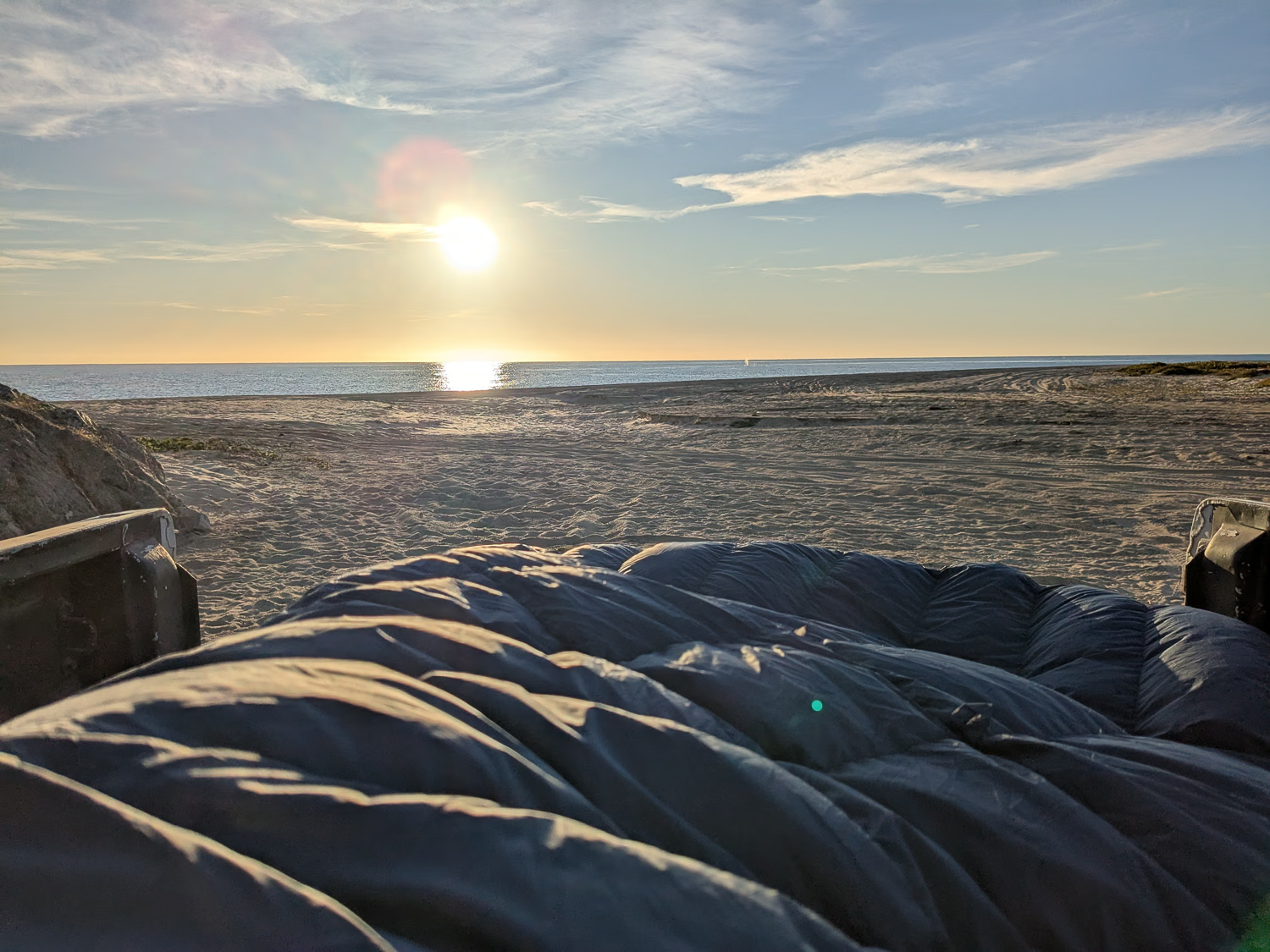
The sound of waves crashing onto sand wakes me up. Over and over, I hear what has in the past few months become as familiar to me as birds singing on an early summer morning back home. Slowly, a new realization begins to creep into my still sleep-clouded consciousness: The sound is slightly altered, it sounds different than I usually know it. It’s not really a rush, more of a hiss. Slowly, I turn onto my back under the blanket and sleeping bag, and I squint. I open my eyes and the sun is already a few degrees above the sea, shining directly into my face from a steel-blue sky. Slowly, I lift my head. My eyes drift over the sea, and suddenly I realize what I had heard: The exhale of a whale! Immediately, I am much more awake. I nudge Lisa and say, “A whale, Lisa, there’s a whale very close to shore!”
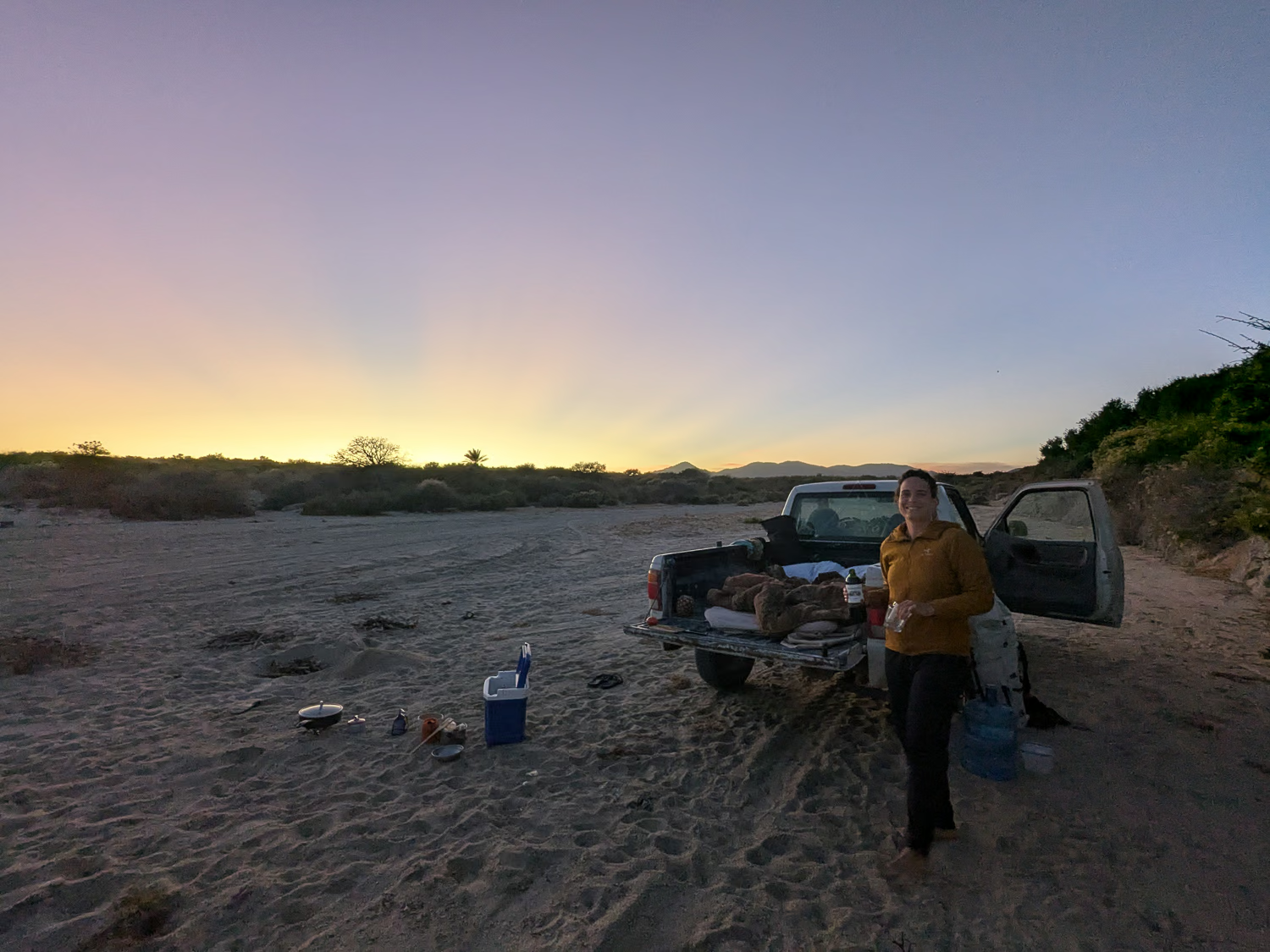
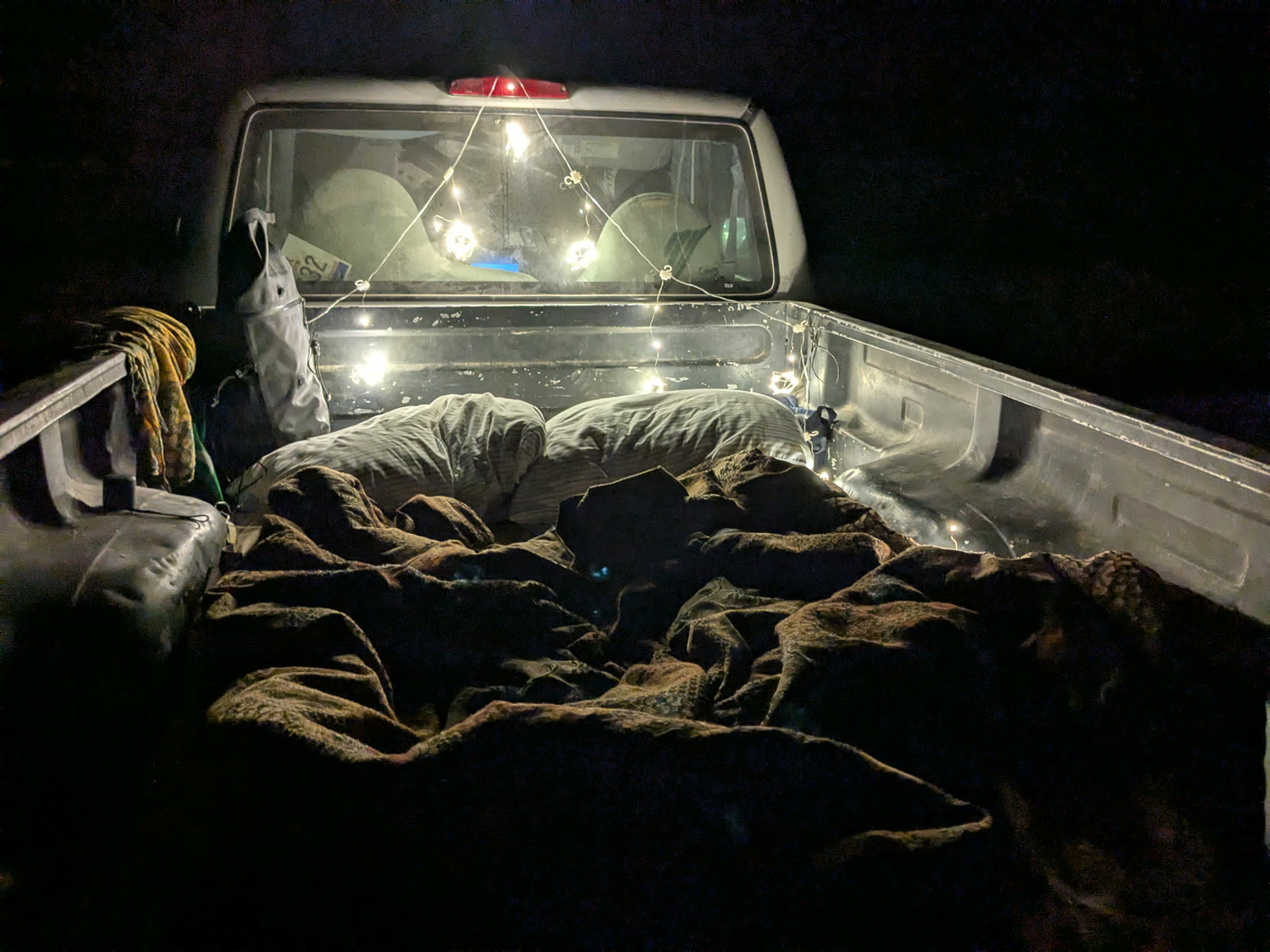
That’s how I woke up on the morning of my birthday, on the back of a pickup truck somewhere on a completely deserted beach at the East Cape of Baja California—woken up by a whale. Not bad, right!?
Baja California is a desert. But a beautiful one. A magical one.
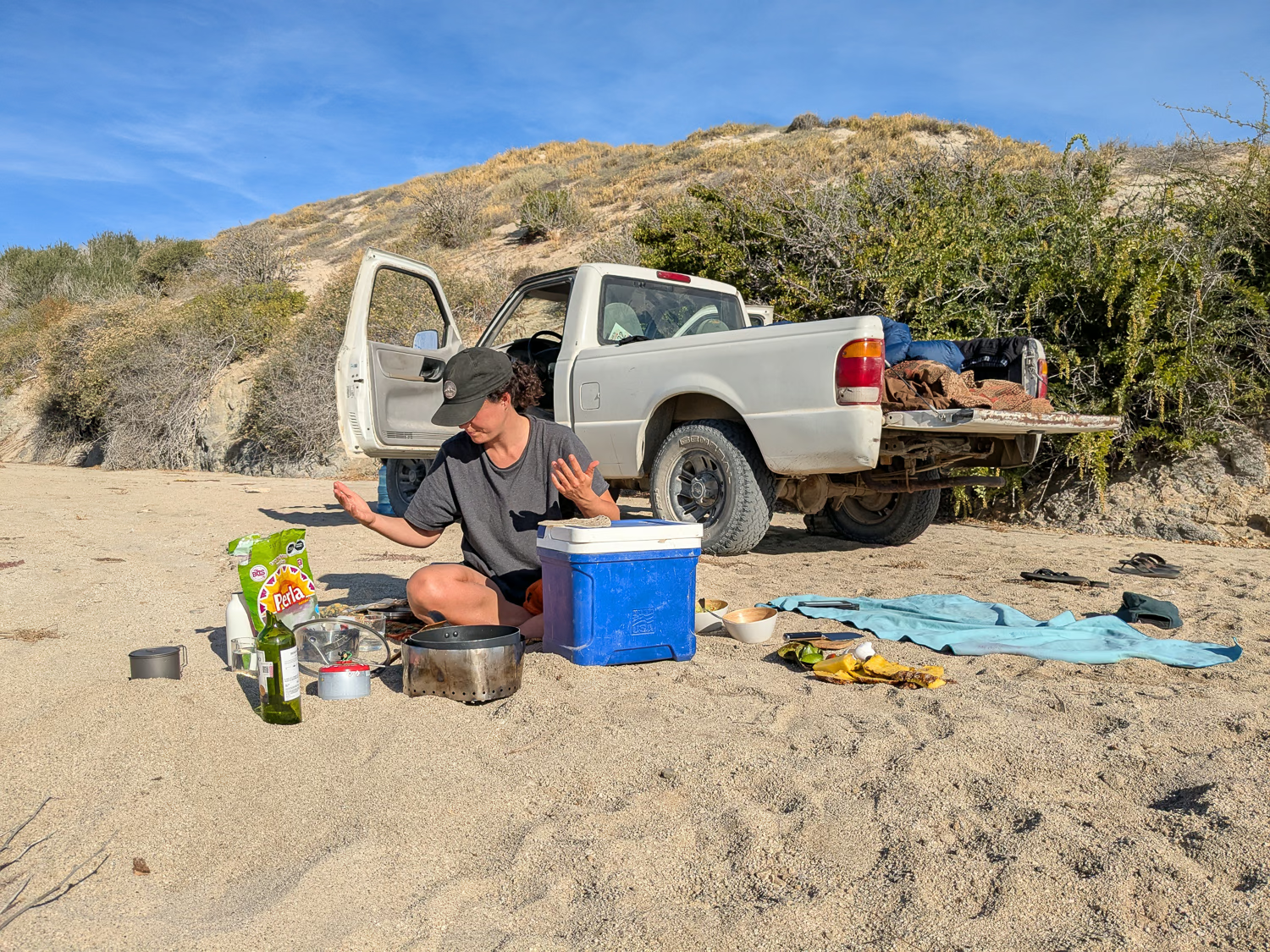
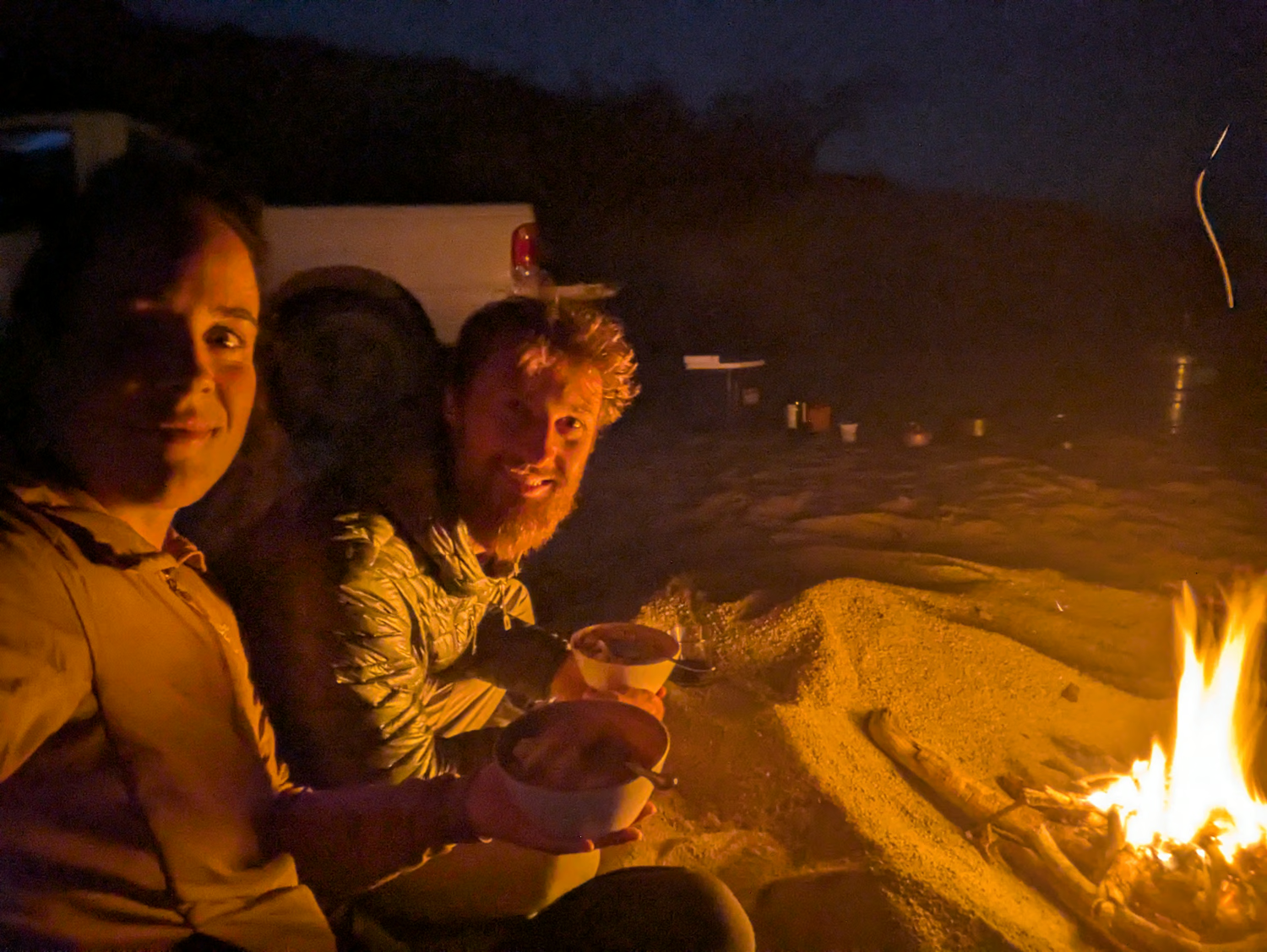
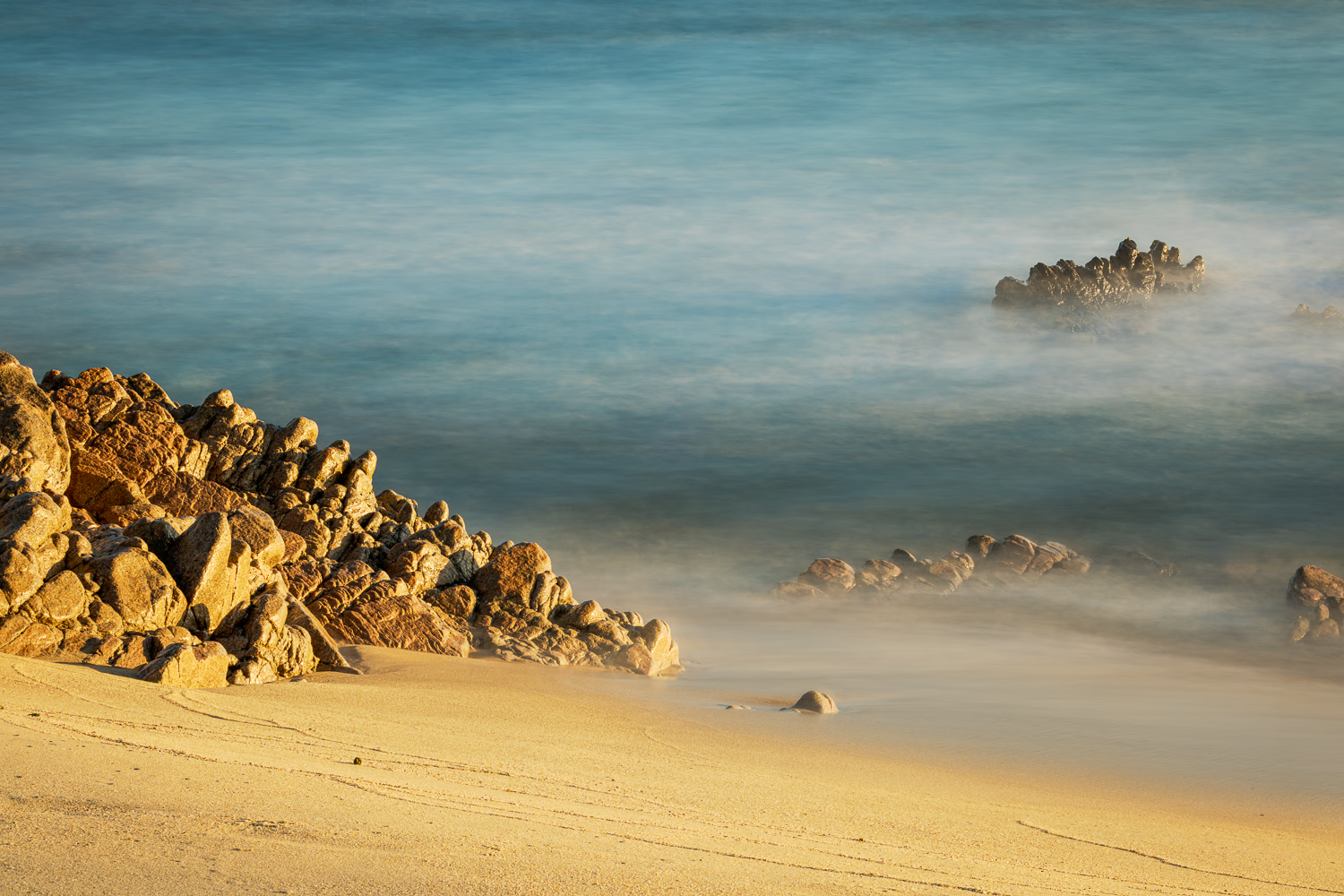
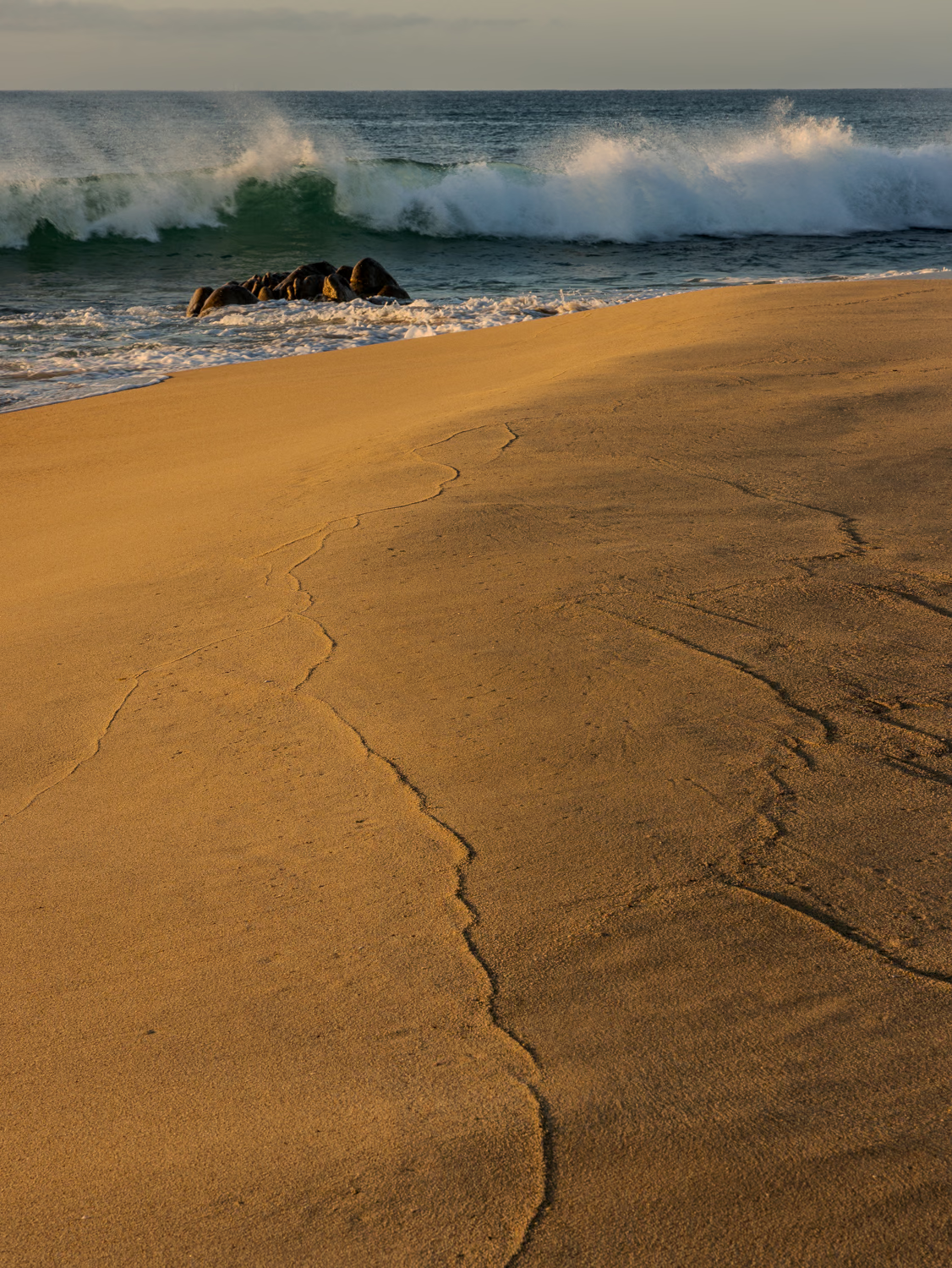
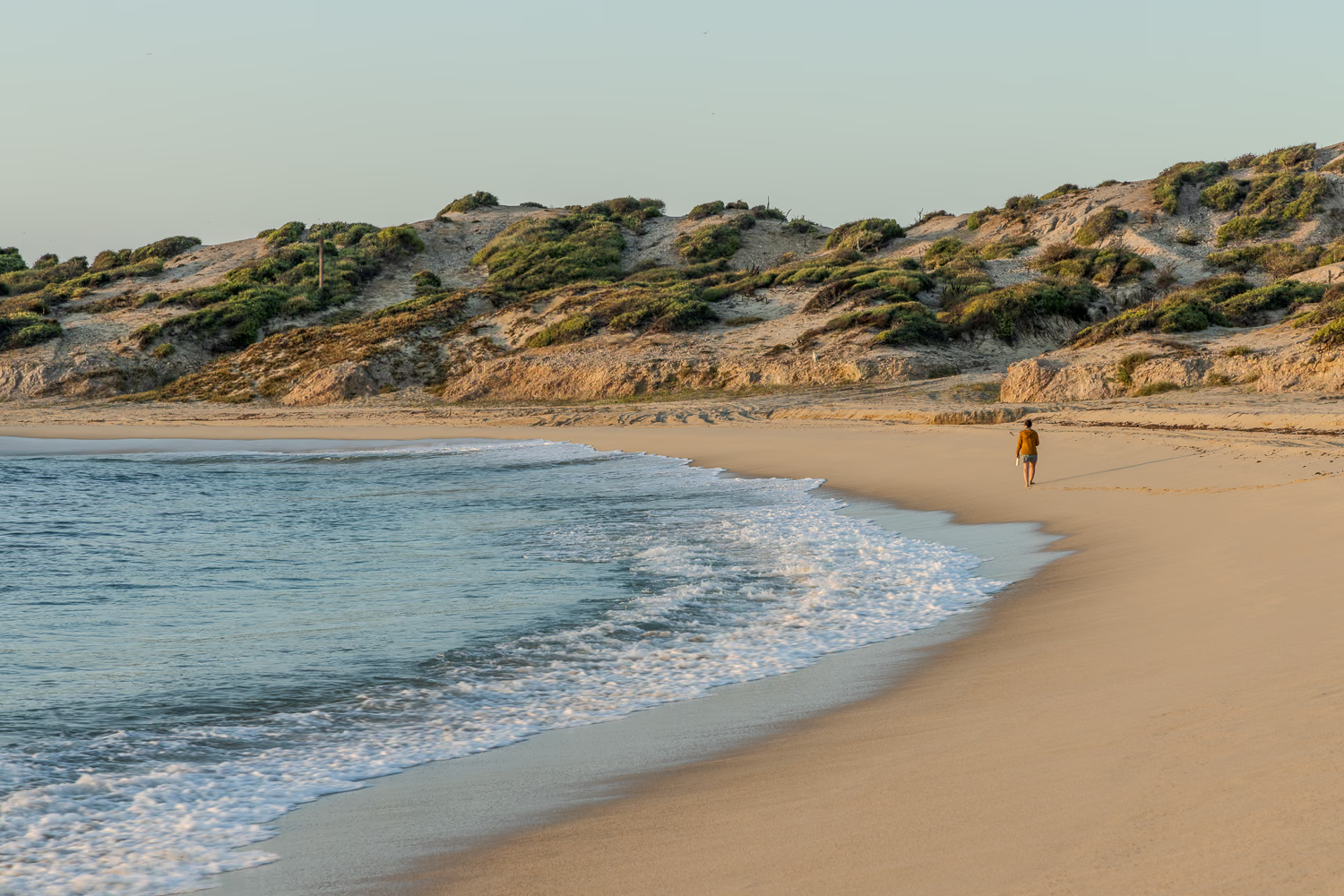
Sunset while camping on the beachBirthday breakfastWeaking up to the sound of an exhaling whaleCampfire on a deserted beachGlamping on the bed of a pickup truckWaves transform stone into sandWaves, sea, sandA morning stroll along the beach in La Fortuna
It feels as though we took a run-up in Vancouver and then just plowed all the way down to the southern tip of this huge peninsula. 3,000 kilometers in pretty much one go (apart from short stops in San Francisco, Tijuana, and La Paz). Sometimes, your feet take you completely to special places completely by chance, it feels like we somehow stumbled upon this little gem here.
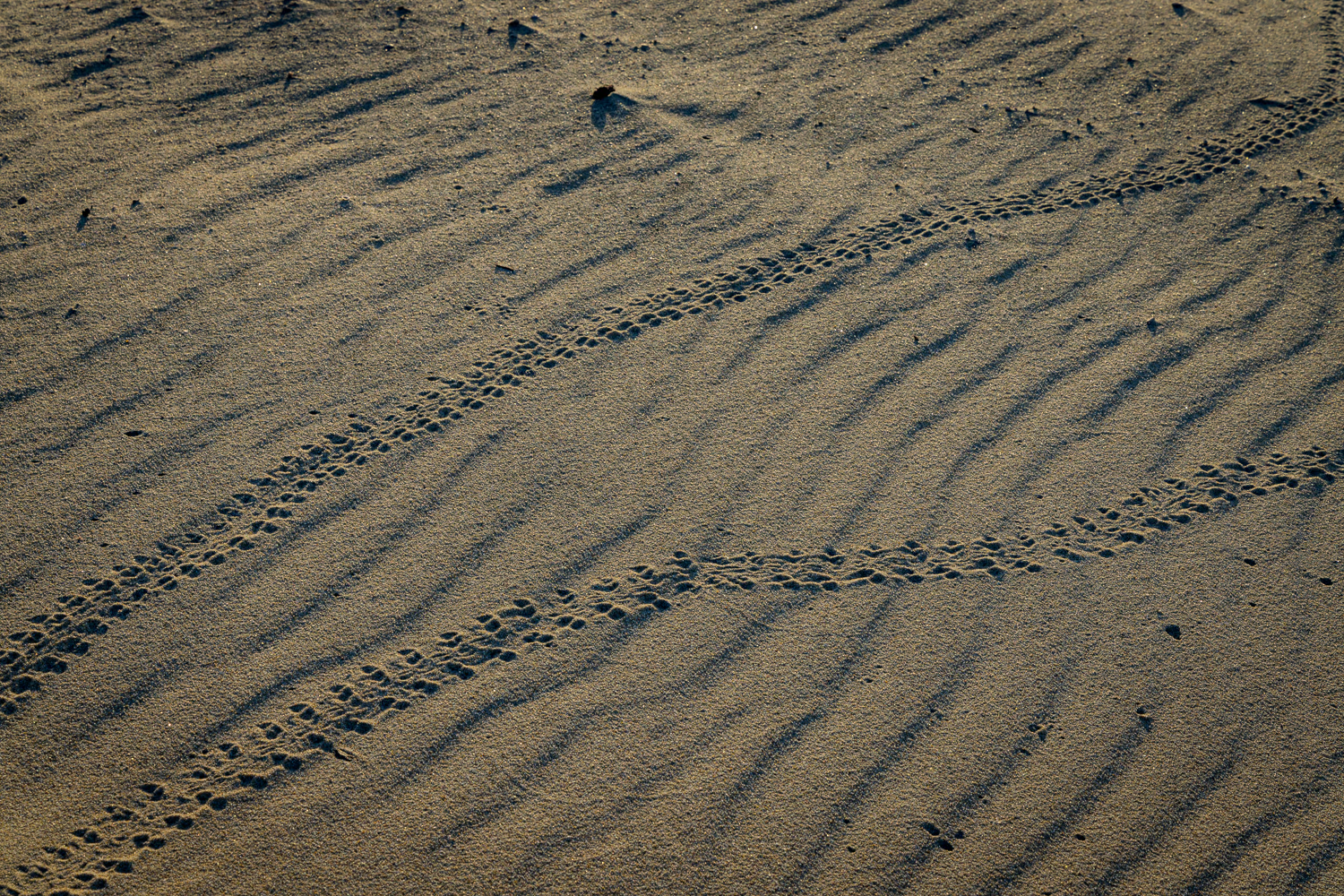
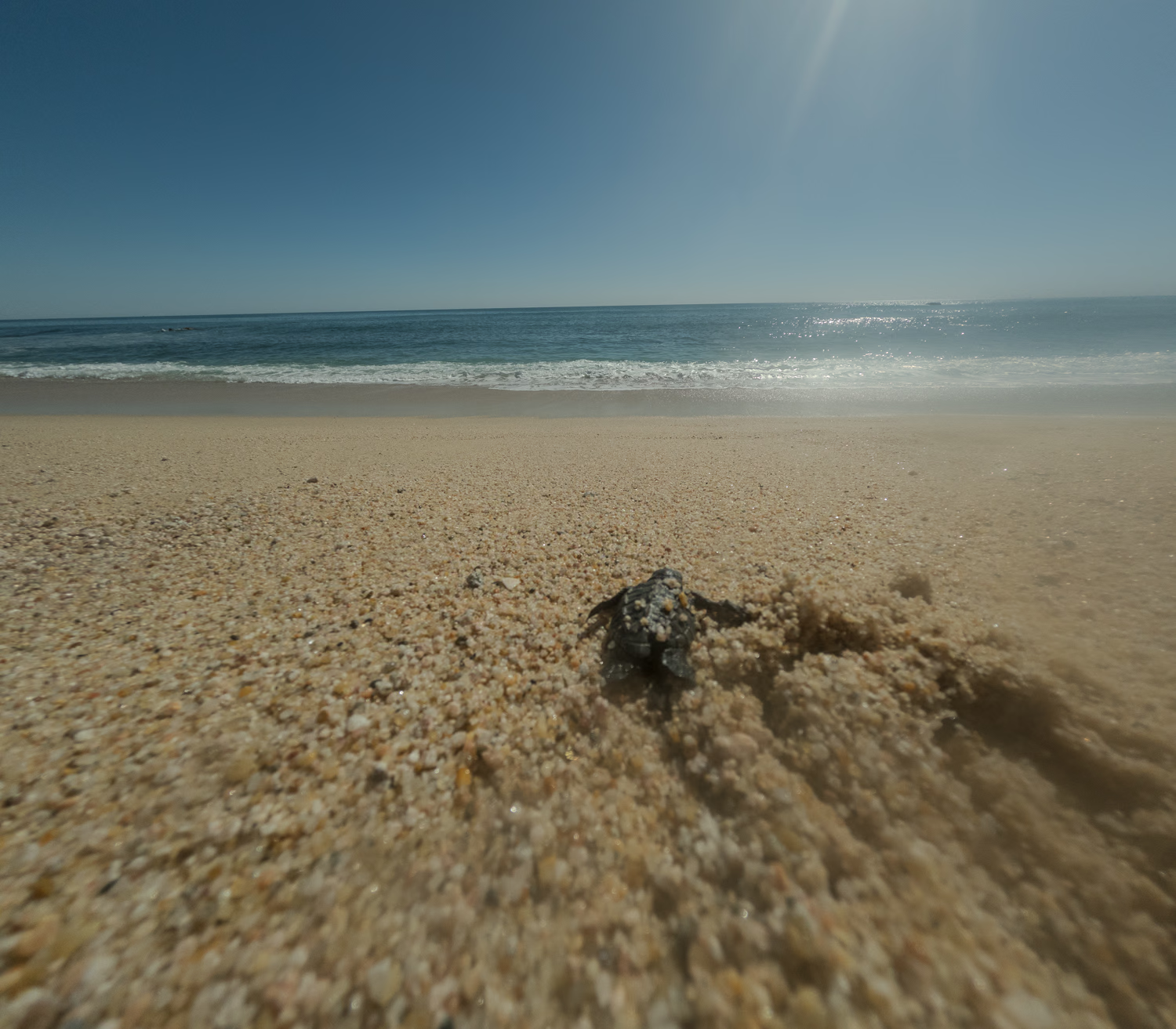
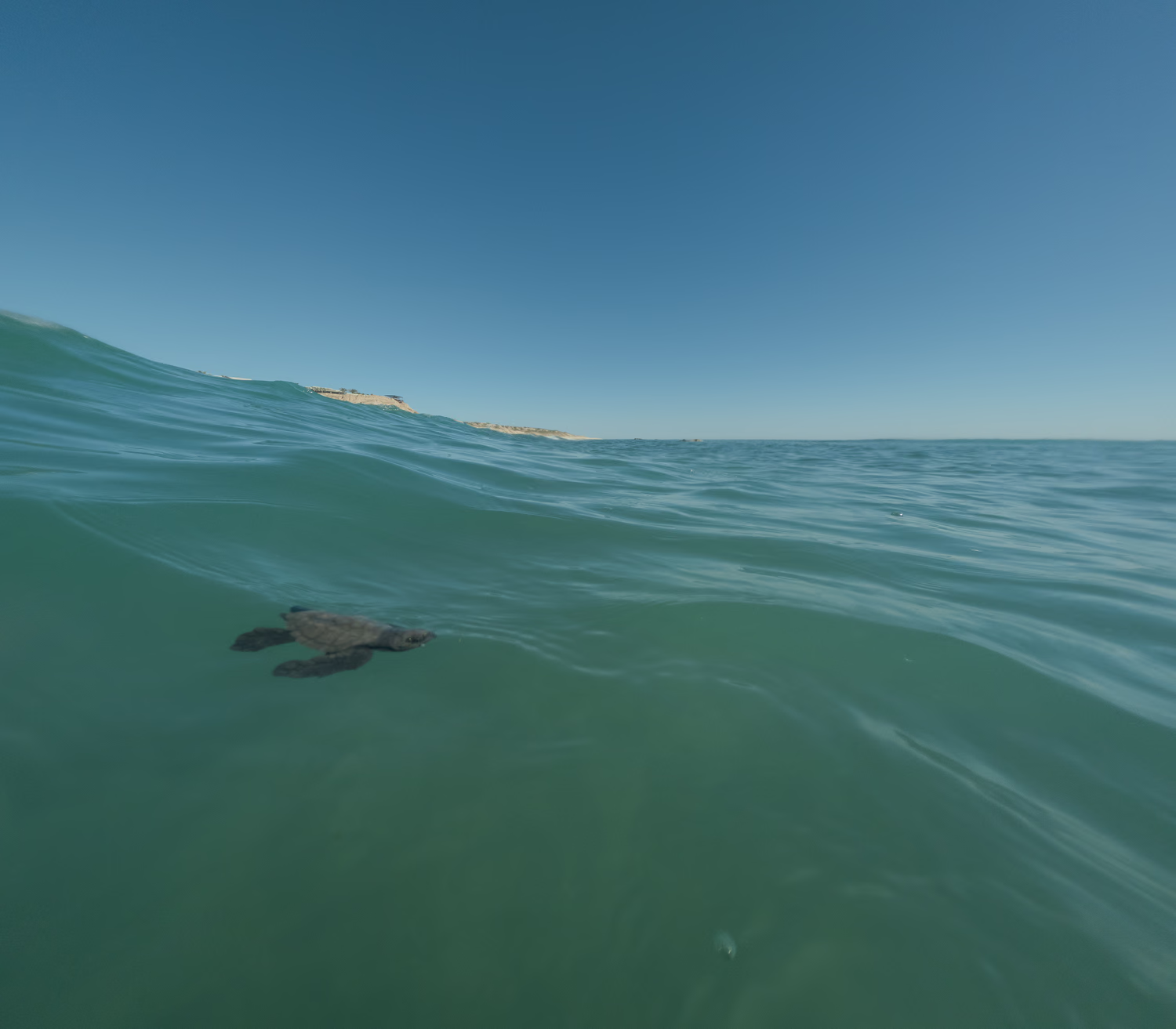
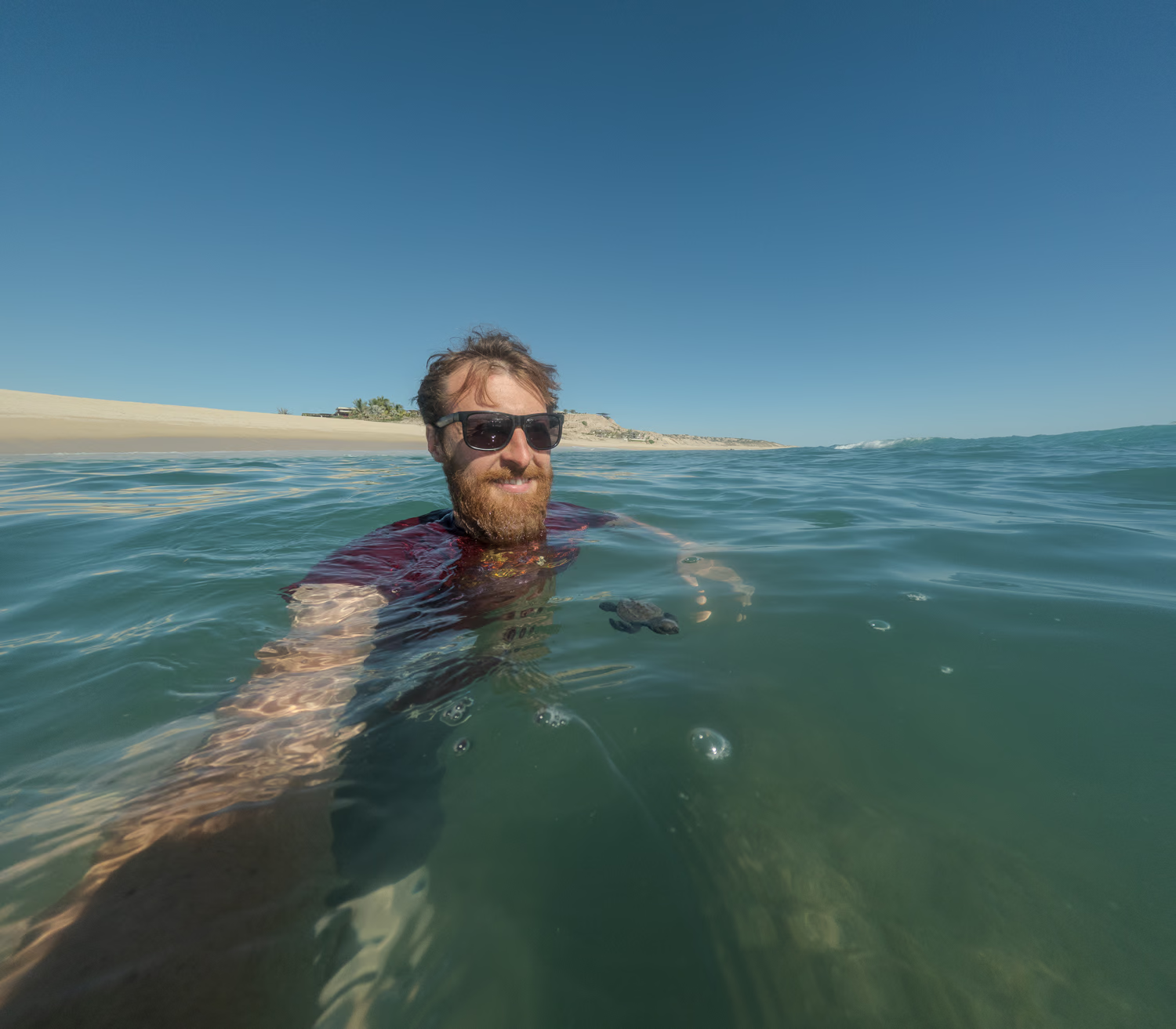
La Fortuna. Originally, we thought we might stay for a month, but now we’ve been here for over two months. This small seaside village, accessible only by a little-used, unpaved road, has captured our hearts. Our home is the Baja Station, a place still in development offering AirBnB-style accommodations, guided boat tours, and equipment rentals. We help out and, in exchange, get free accommodation and the opportunity to use all the water sports equipment for free. The variety of things you can do in the water is one of the reasons we love being here so much. Every day, you can choose: swimming, surfing, stand-up paddling, kayaking, snorkeling, windsurfing, sailing, kitesurfing, or spearfishing—or any combination of these, of course. But the best part are the whales that pass by in huge numbers. It’s almost the exception if, at any given moment, you can’t spot one somewhere on the horizon, exhaling a big fountain of water, stretching its fins out of the water, or leaping out in a huge arc, crashing back down into the sea with a big splash. Then there are the rays, traveling alone or sometimes in huge schools, pretty boxfish, playful dolphins, spiky pufferfish, and impressive sea lions. And let’s not forget the cute turtles that lay their eggs, whose babies you sometimes find on the beach, and you can help them make it safely to the water.
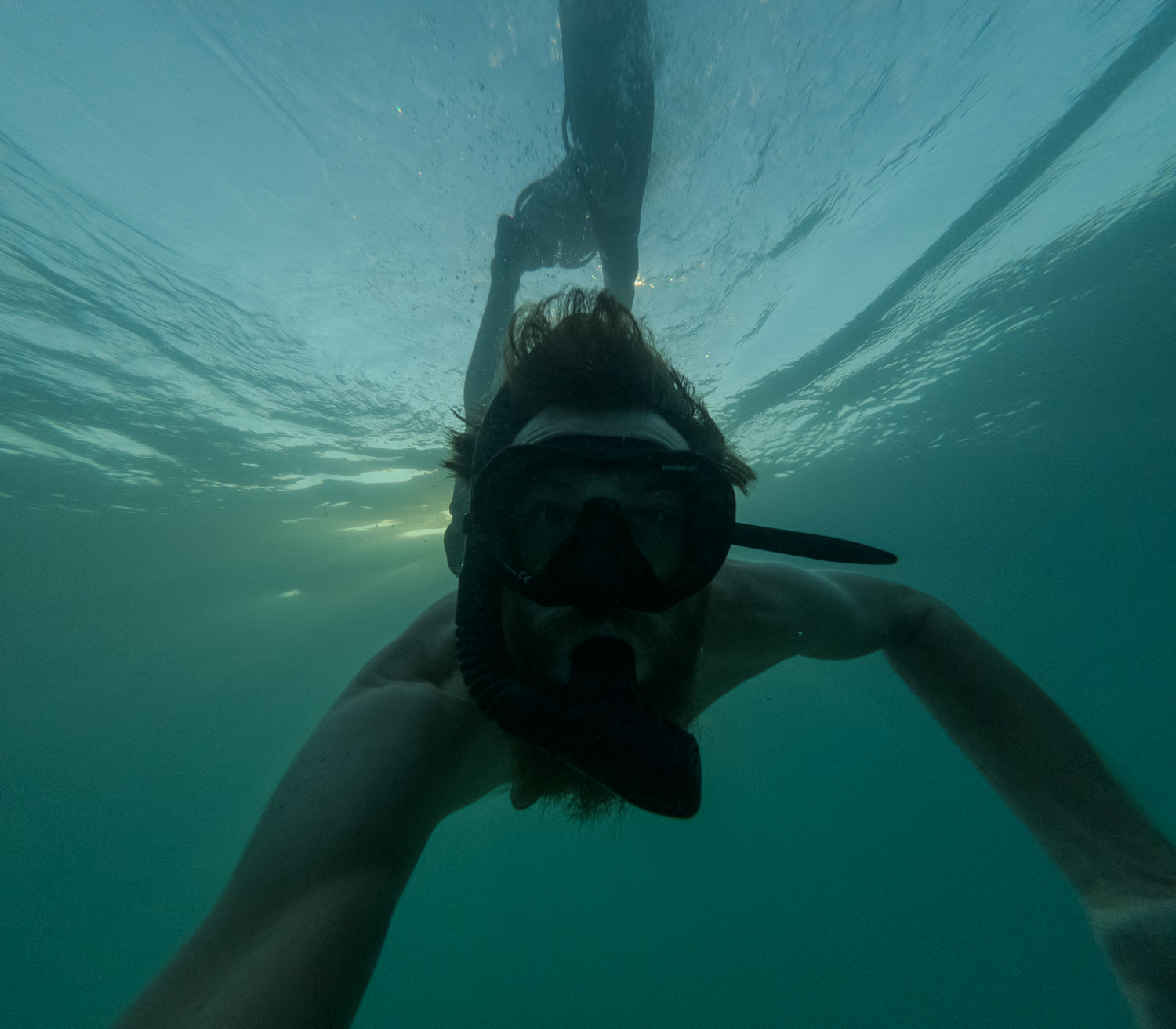
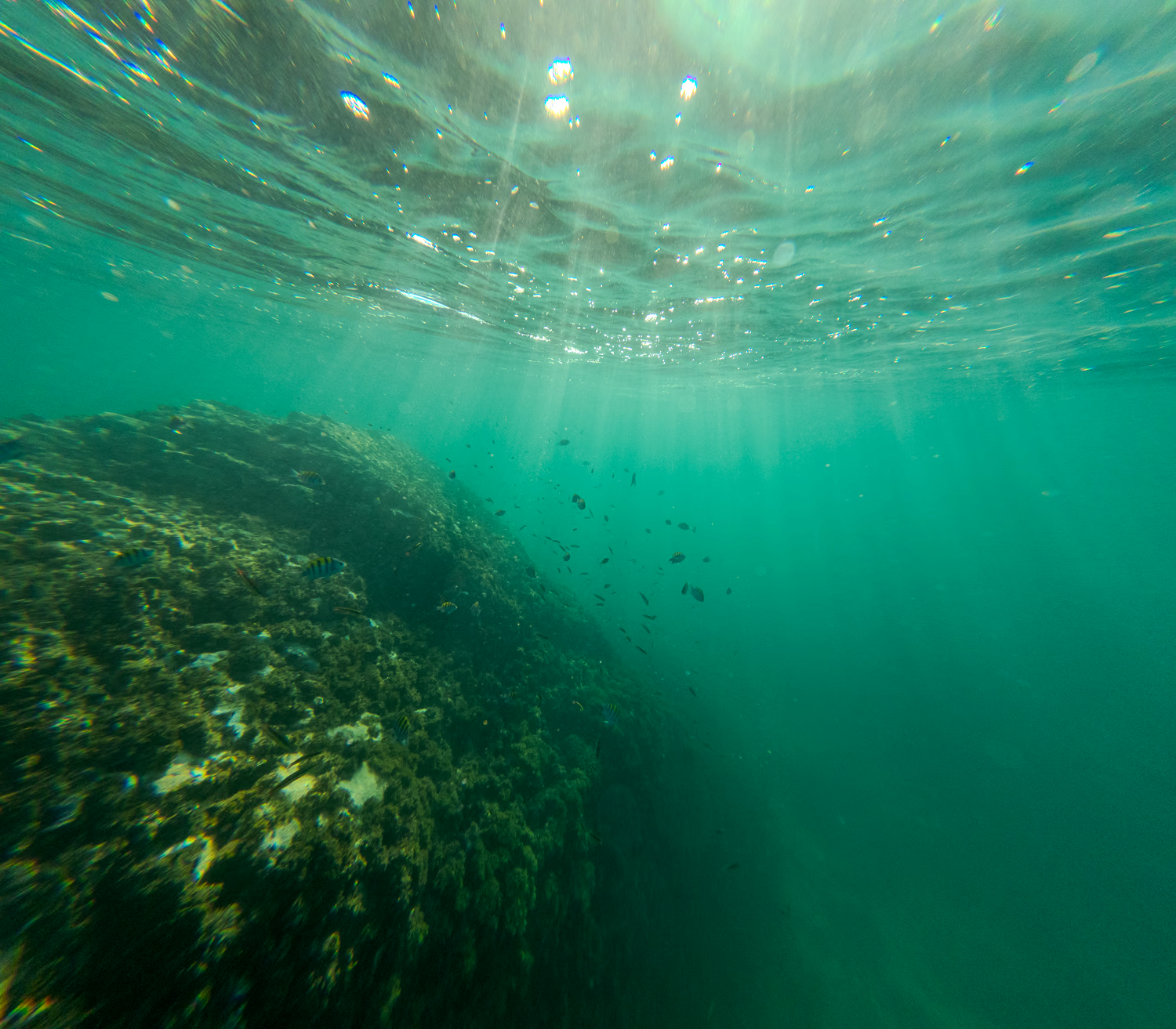
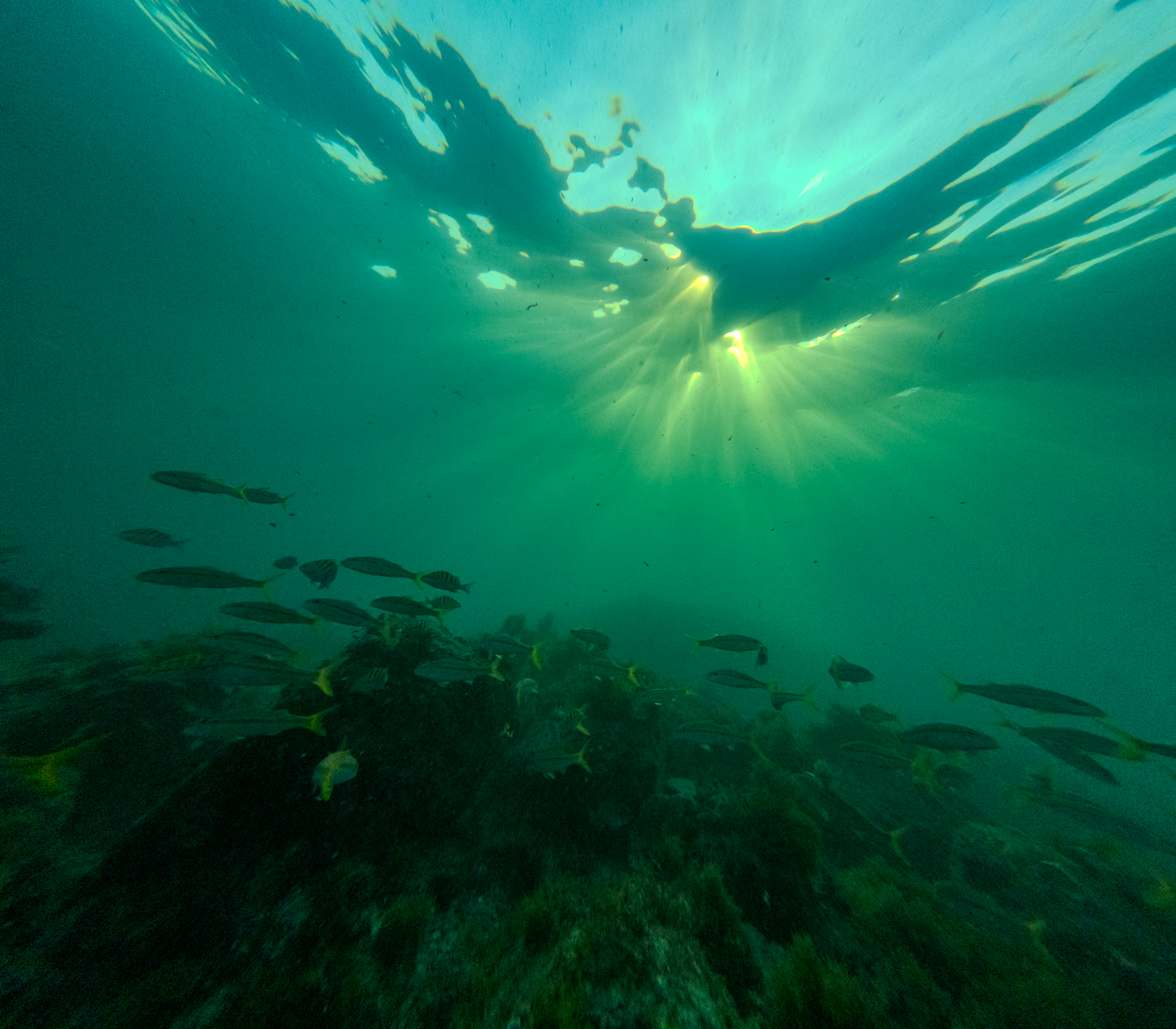
The tracks of baby turtles are visible all along the beachA baby turtle on her way to the seaA baby turtle swimming towards the wide open oceanSwimming with a baby turtleSnorkelingUnderwater worldsLarge schools of fish can often be spotted under waterA small reef
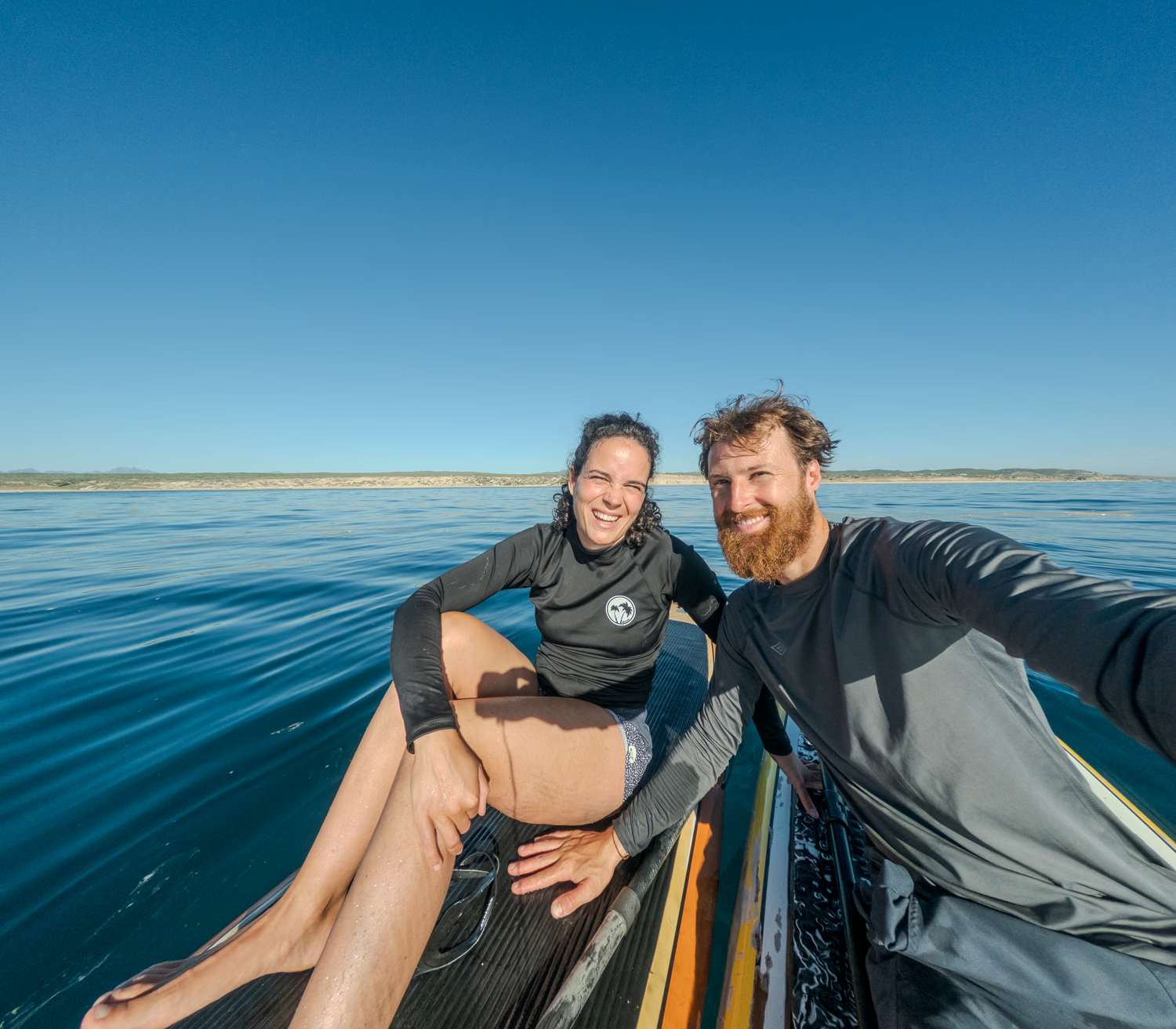
A second reason are the other volunteers here at the Baja Station and the small community we have formed here. At the beginning there were just five volunteers, now there are 18 of us, plus Gio, the sun-drenched, funny and somehow quirky British-born owner. Plus his two dogs, Mama and Papaya. The atmosphere here is very relaxed. Punctuality isn’t a big concern and stress hard to find. There’s always time to grab a coffee, have a chat about God and the world, open a cold beer, down a shot of mezcal, spontaneously stick a surfboard under your arm when the waves look good, go for a walk on the beach with the dogs, or leave everything behind, grab a SUP and paddle out to sea when a whale appears close to the coast.
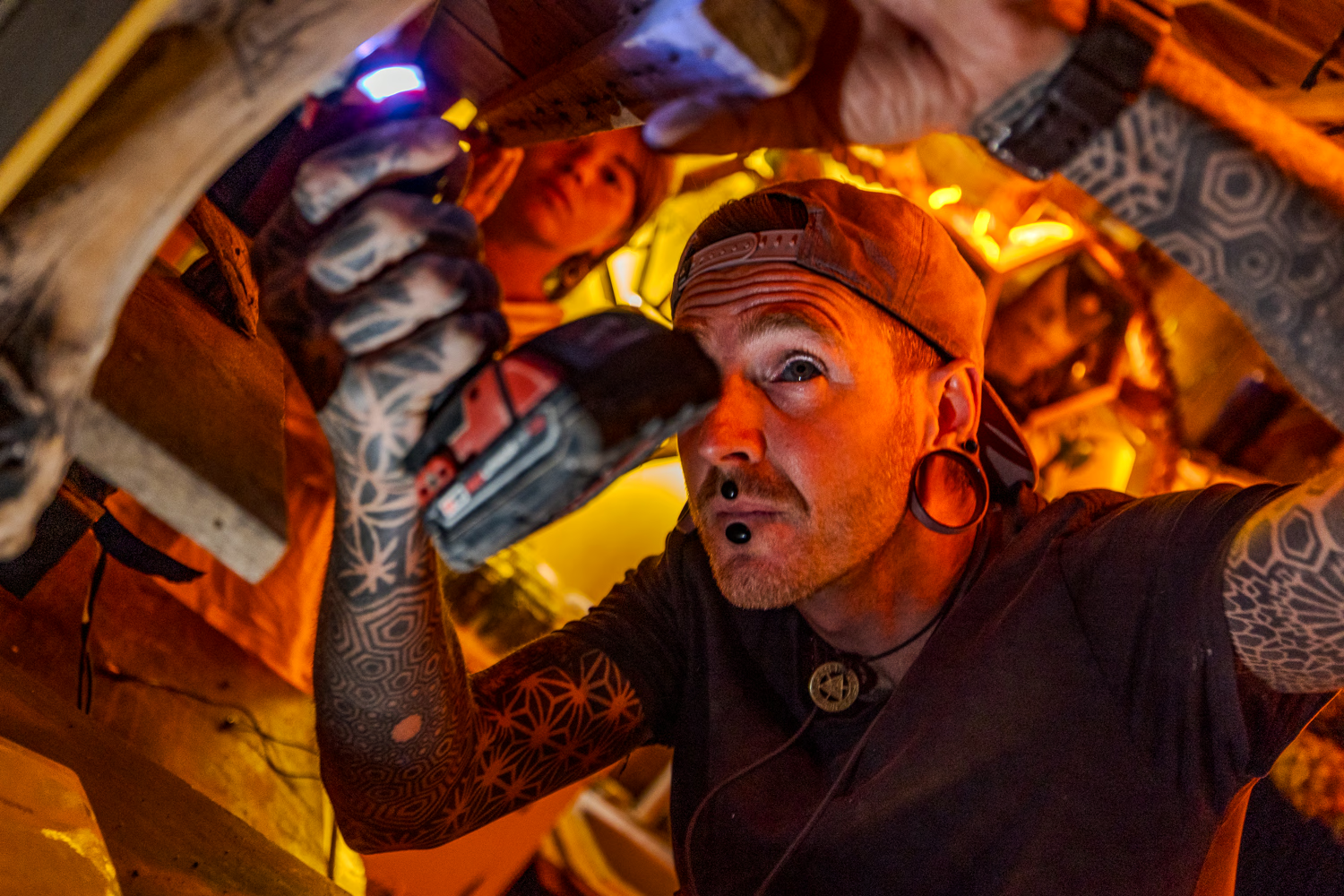
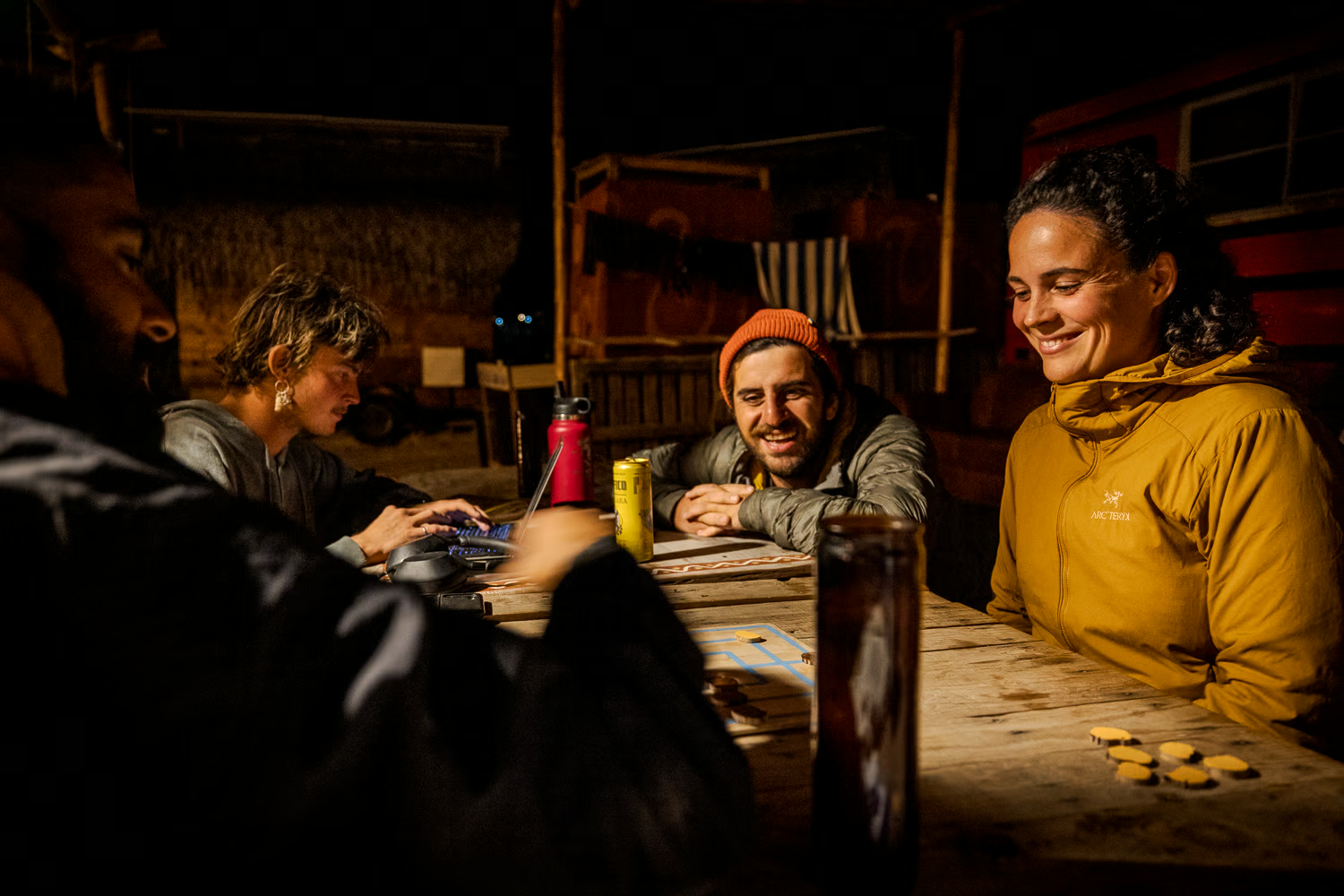
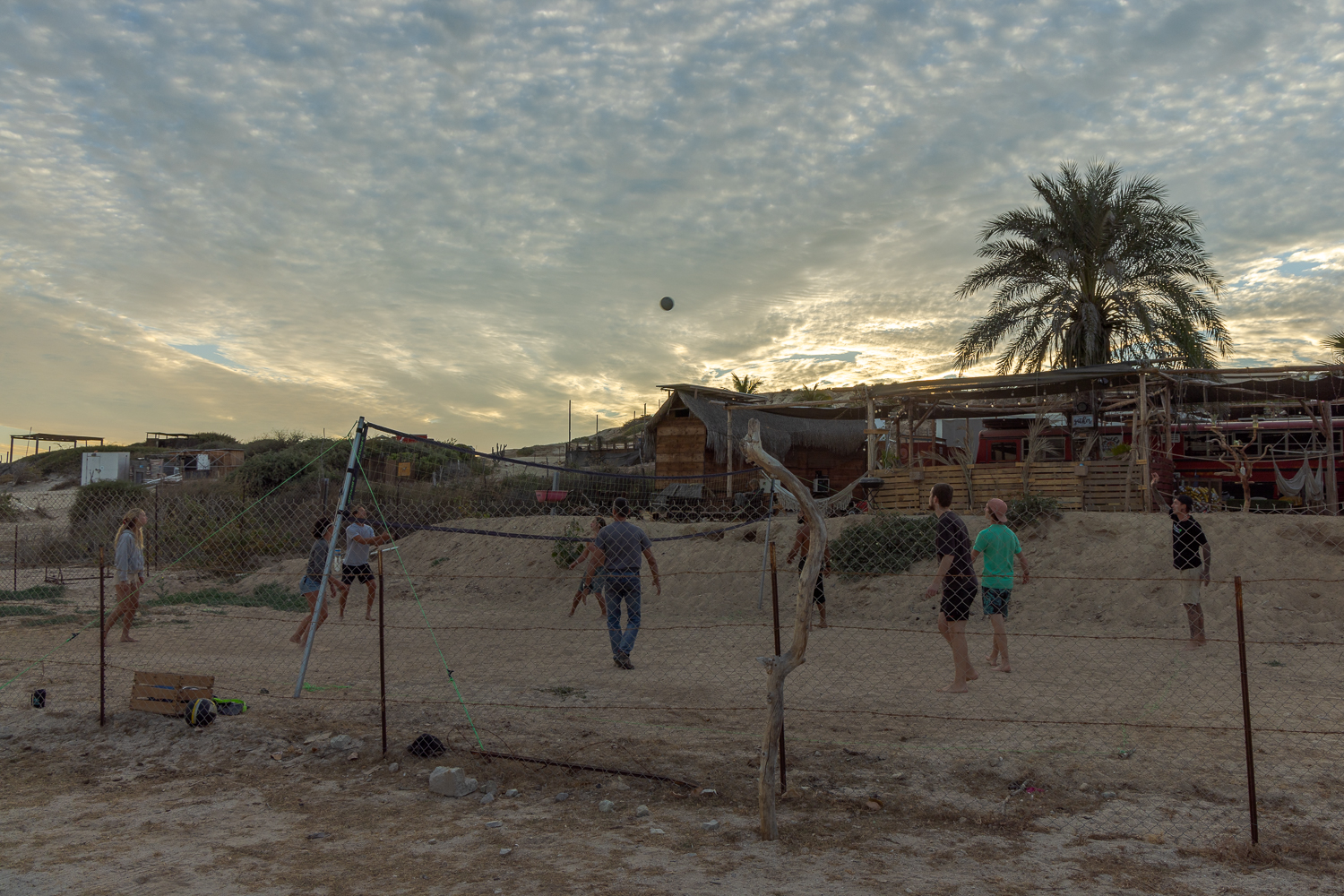
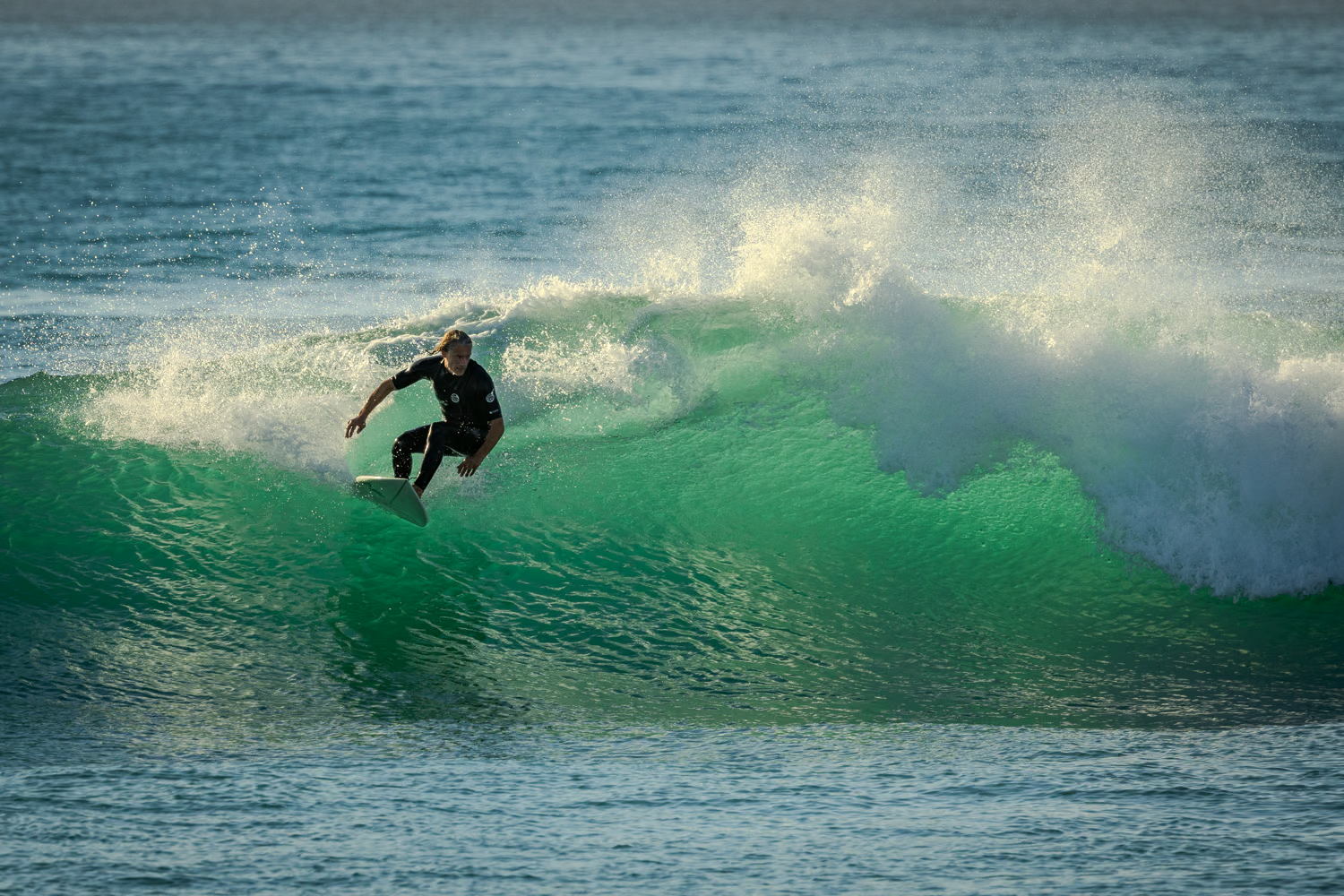
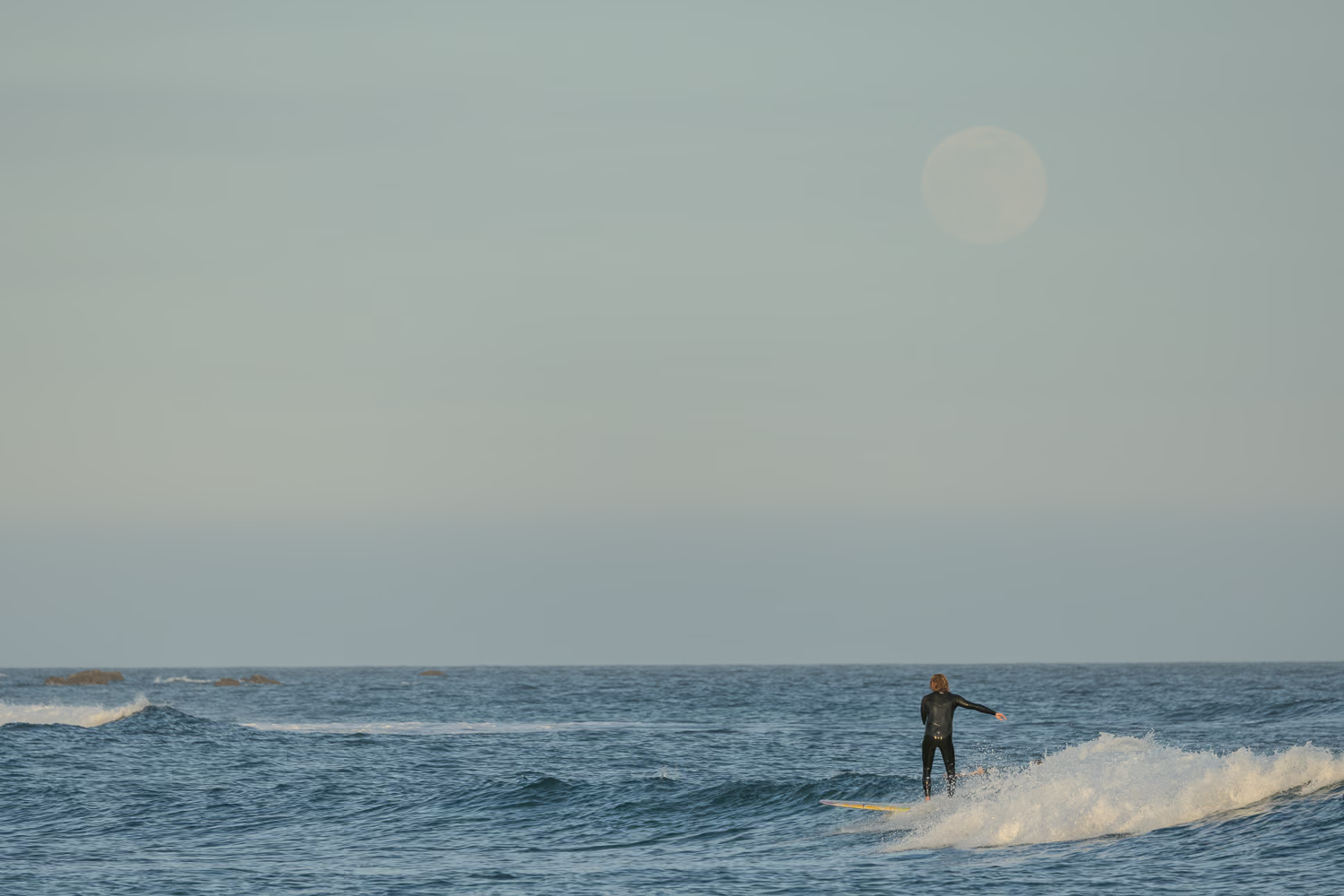
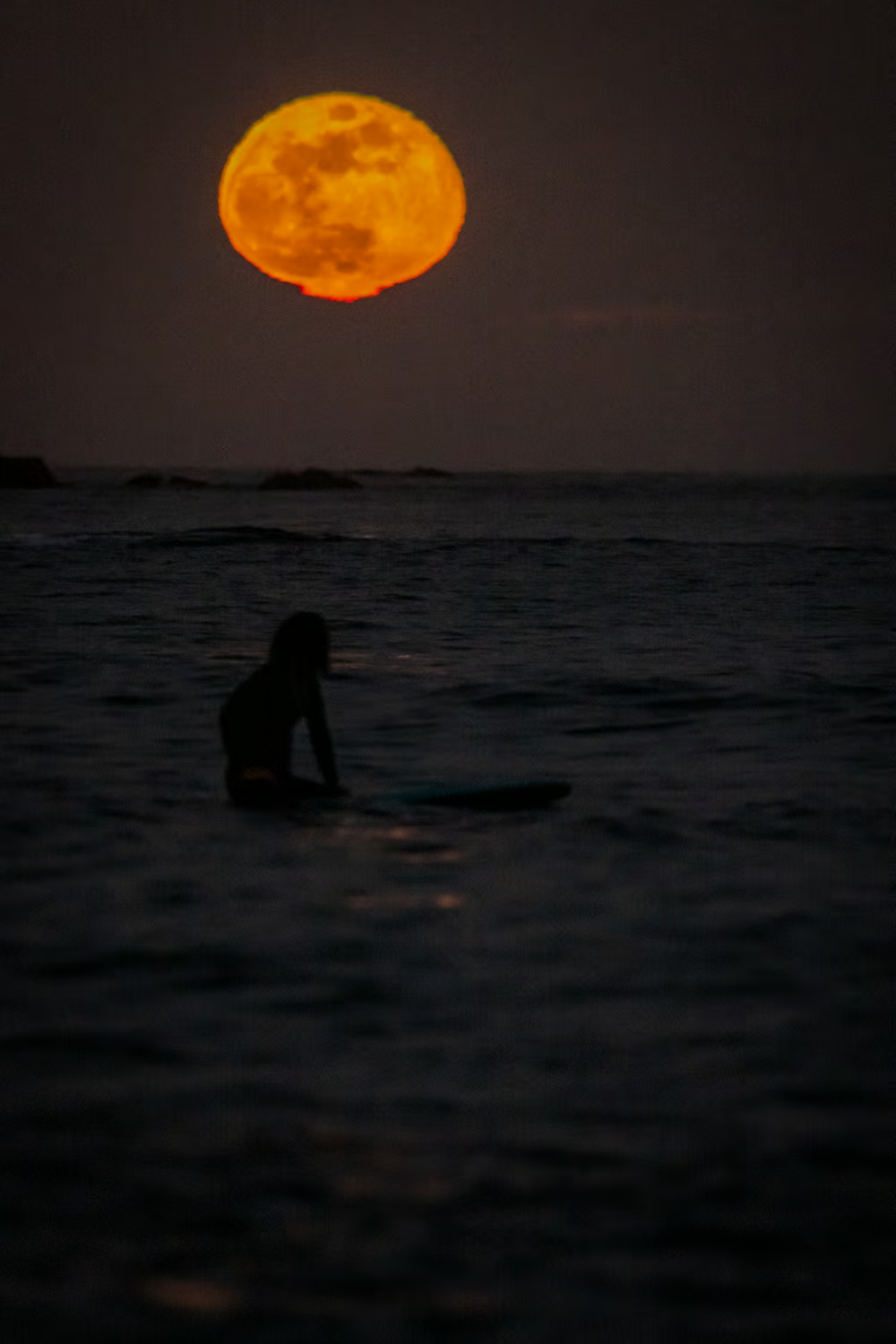
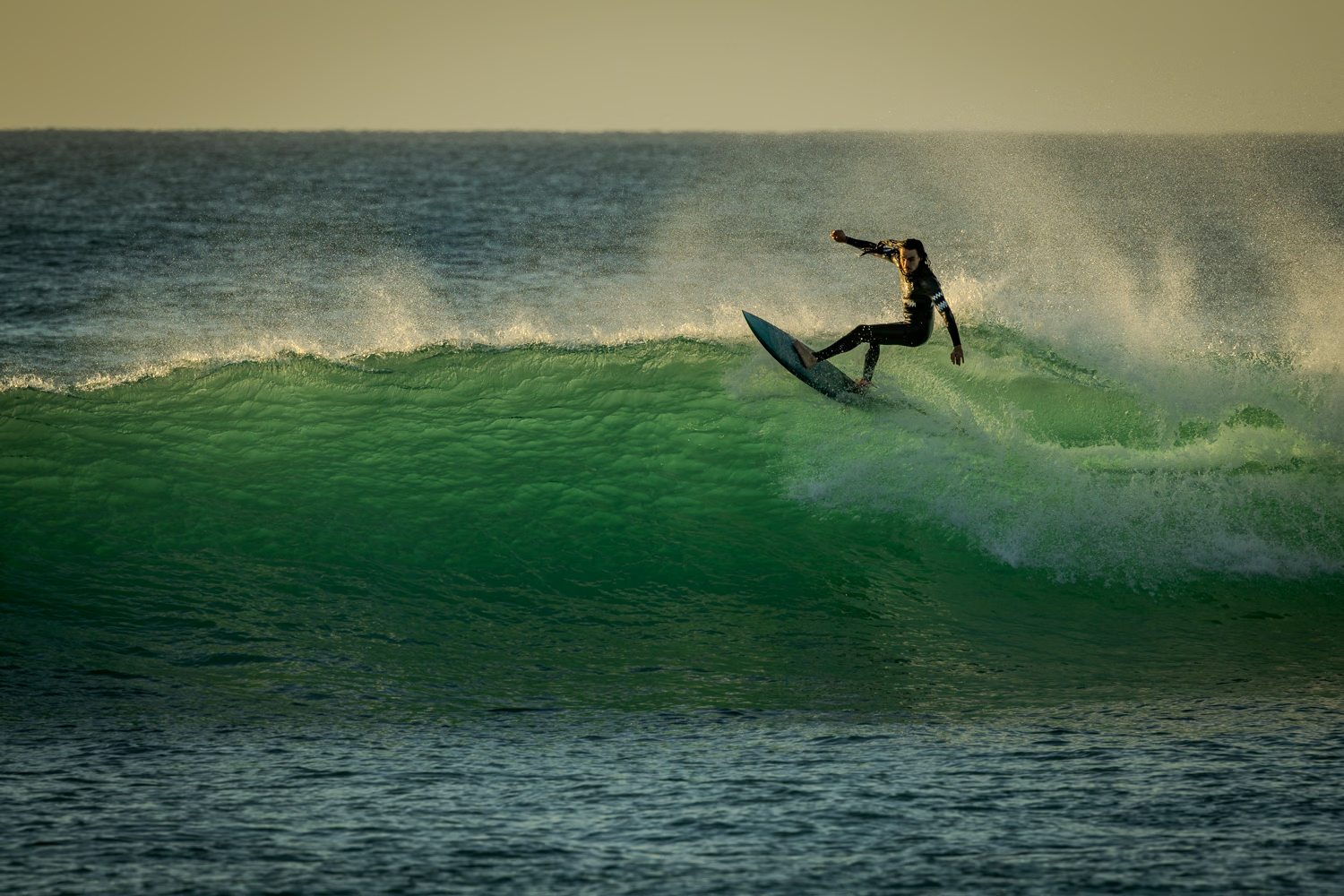
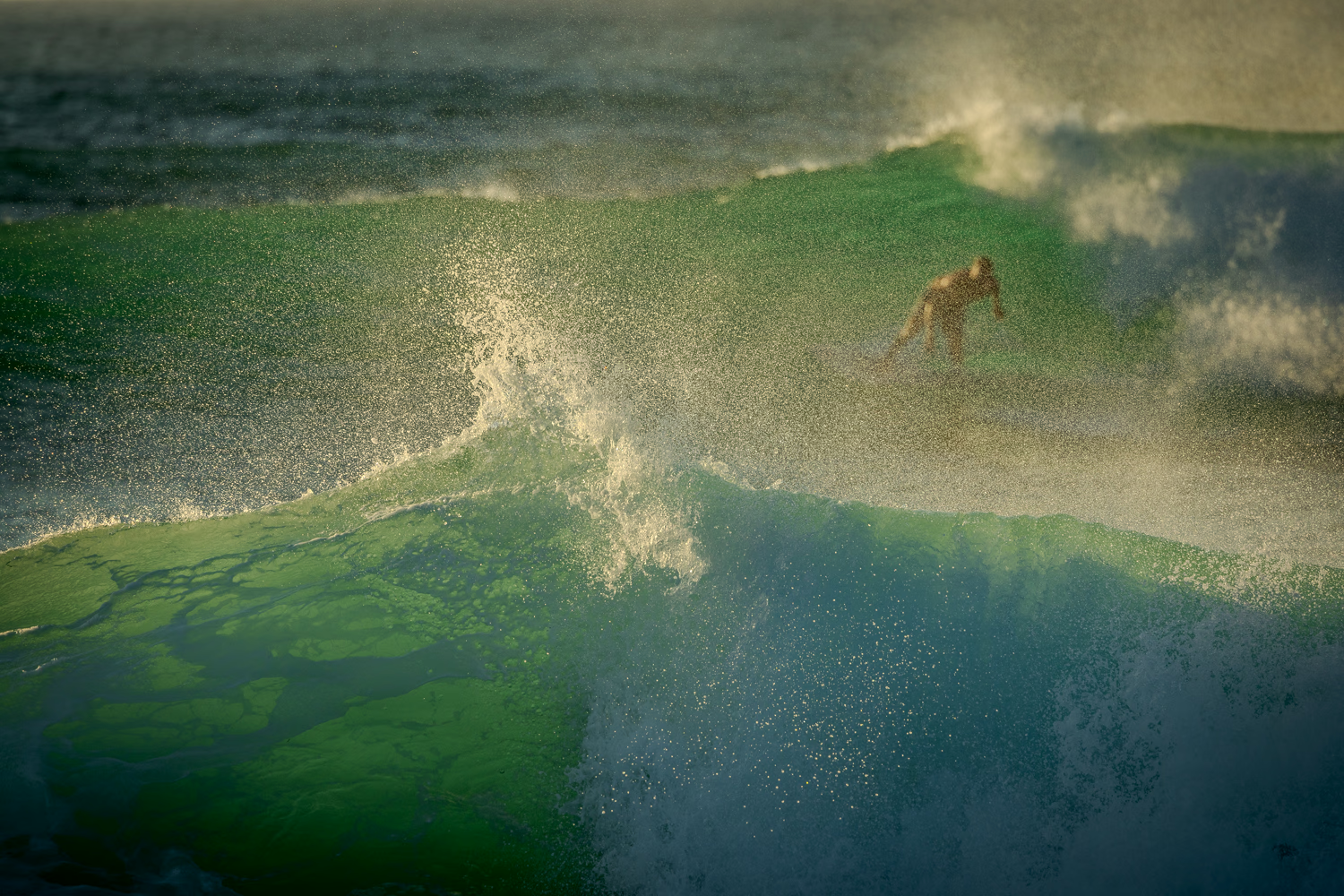
Marty and Sisi mounting new shelves in the cafePlaying the Swiss game “Müli” (mill) after dinnerBeach volleyball with the other volunteersSurfer in the morning at the La Fortuna breakSurfing at the second break called “Marshmallow”Waiting for waves during a full moon sessionSurfer in the morning at the La Fortuna breakSometimes the waves get big in La Fortuna
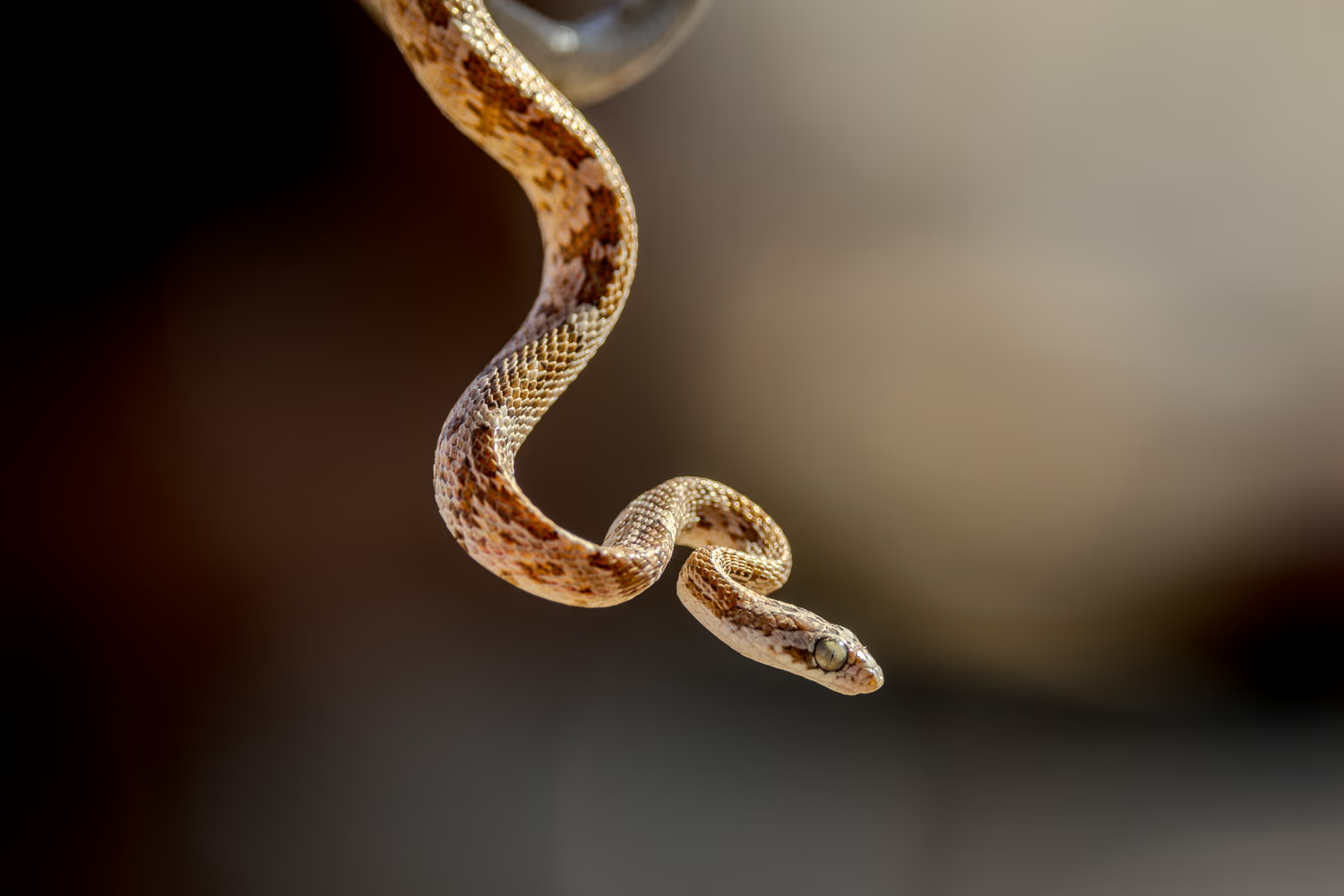
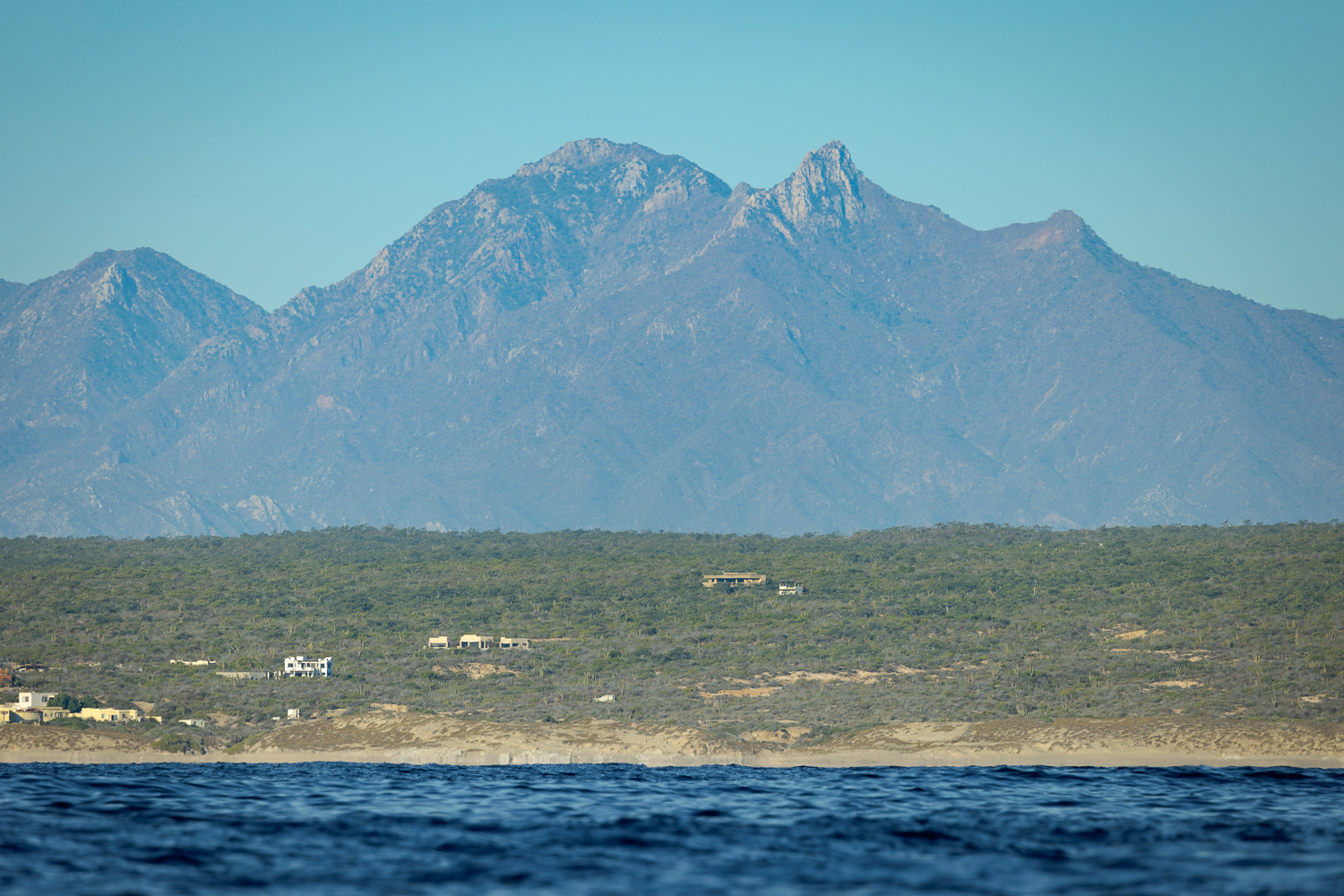
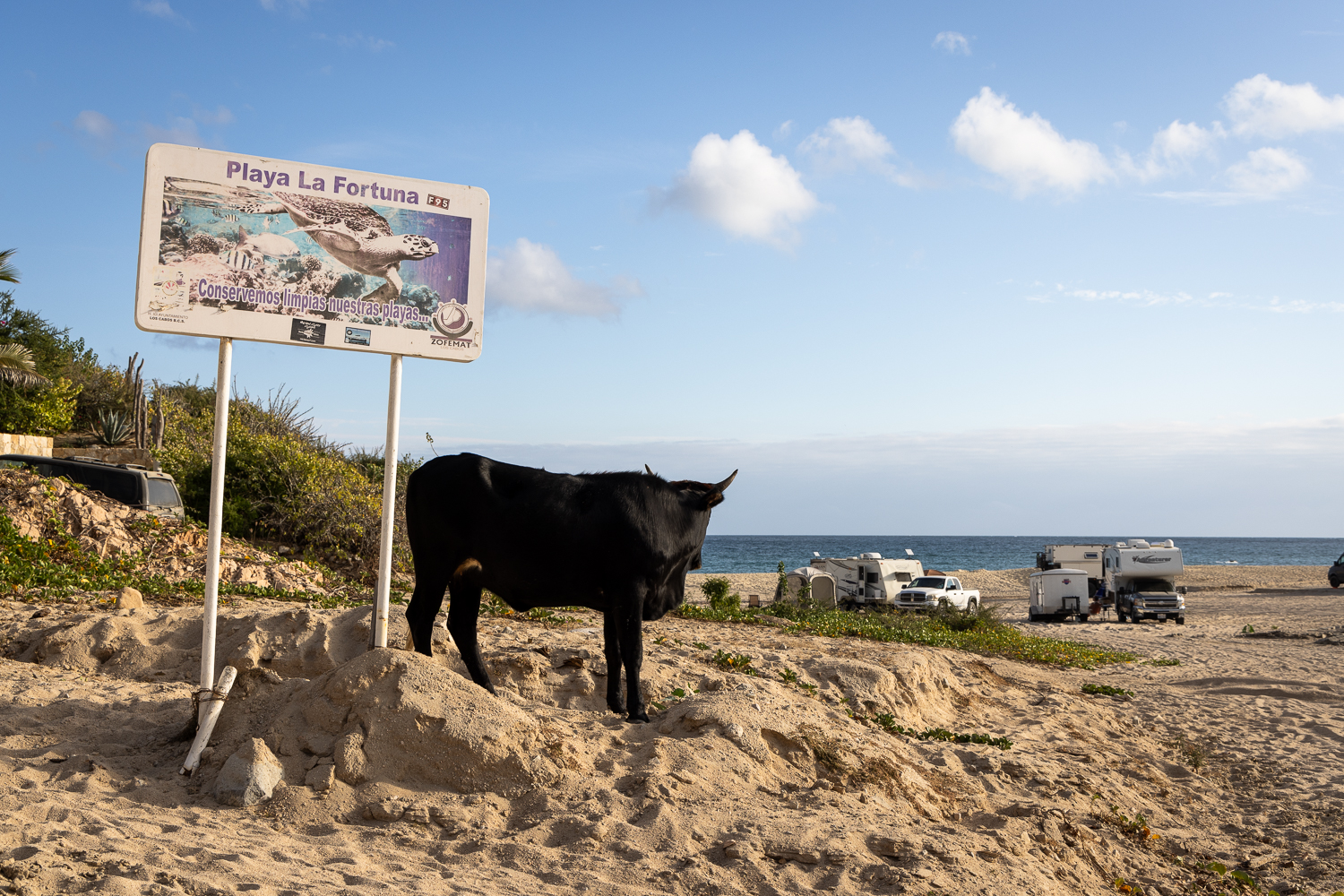
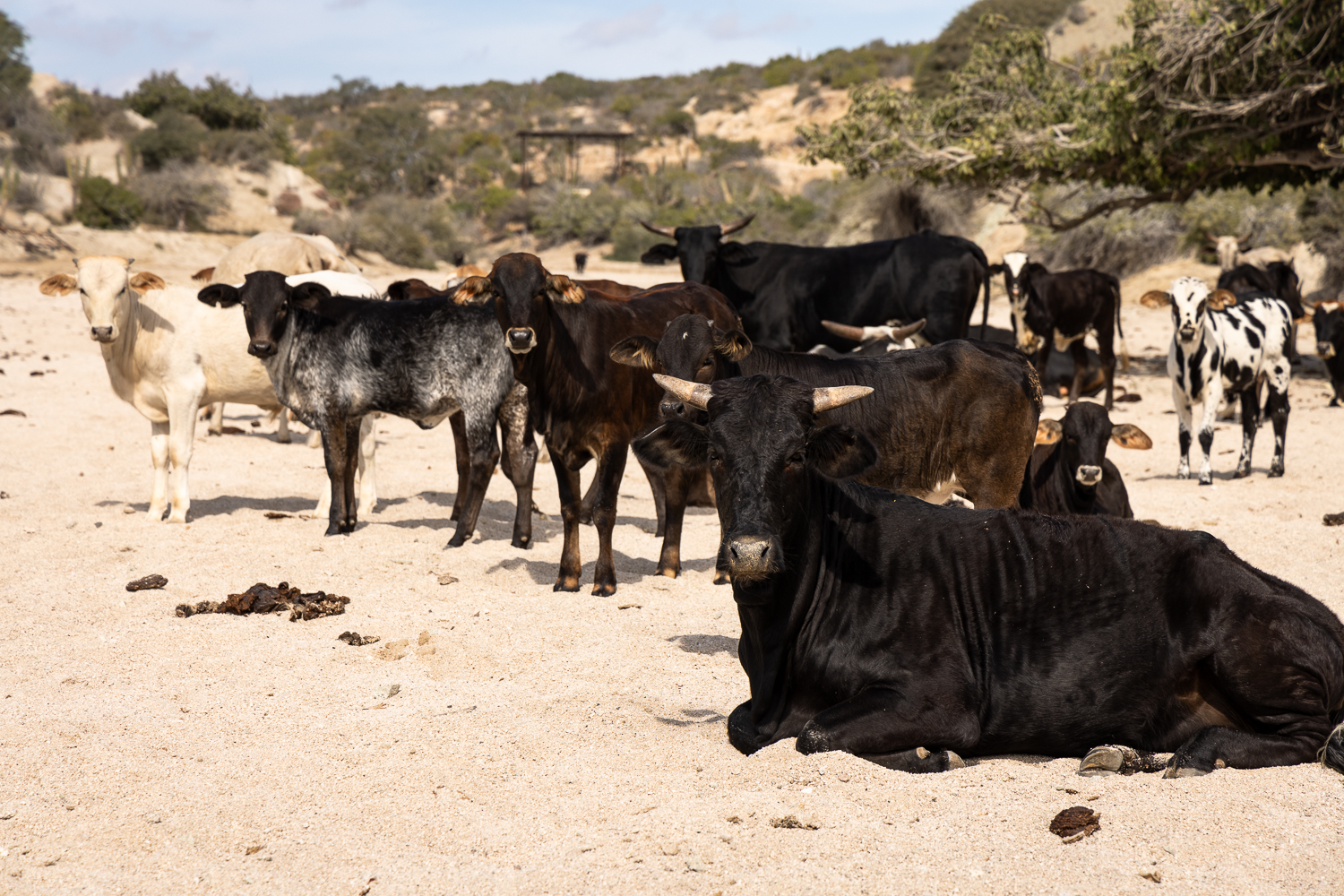
If you walk up the hill and look to the east, there’s the open Pacific; an endless blue expanse. Every now and then a lonely sailing or motor boat. To the north and south, along the coast, there are endless sandy beaches dotted with scattered rocks. To the east lies the hinterland of the Baja; sandy, barren, dry and yet covered in cacti, prickly bushes and trees with thick, leathery leaves. A home for an astonishing number of animals. These include various birds, lizards, snakes, insects, donkeys, goats and even cows. It’s amazing how many species can withstand the harsh desert conditions here.
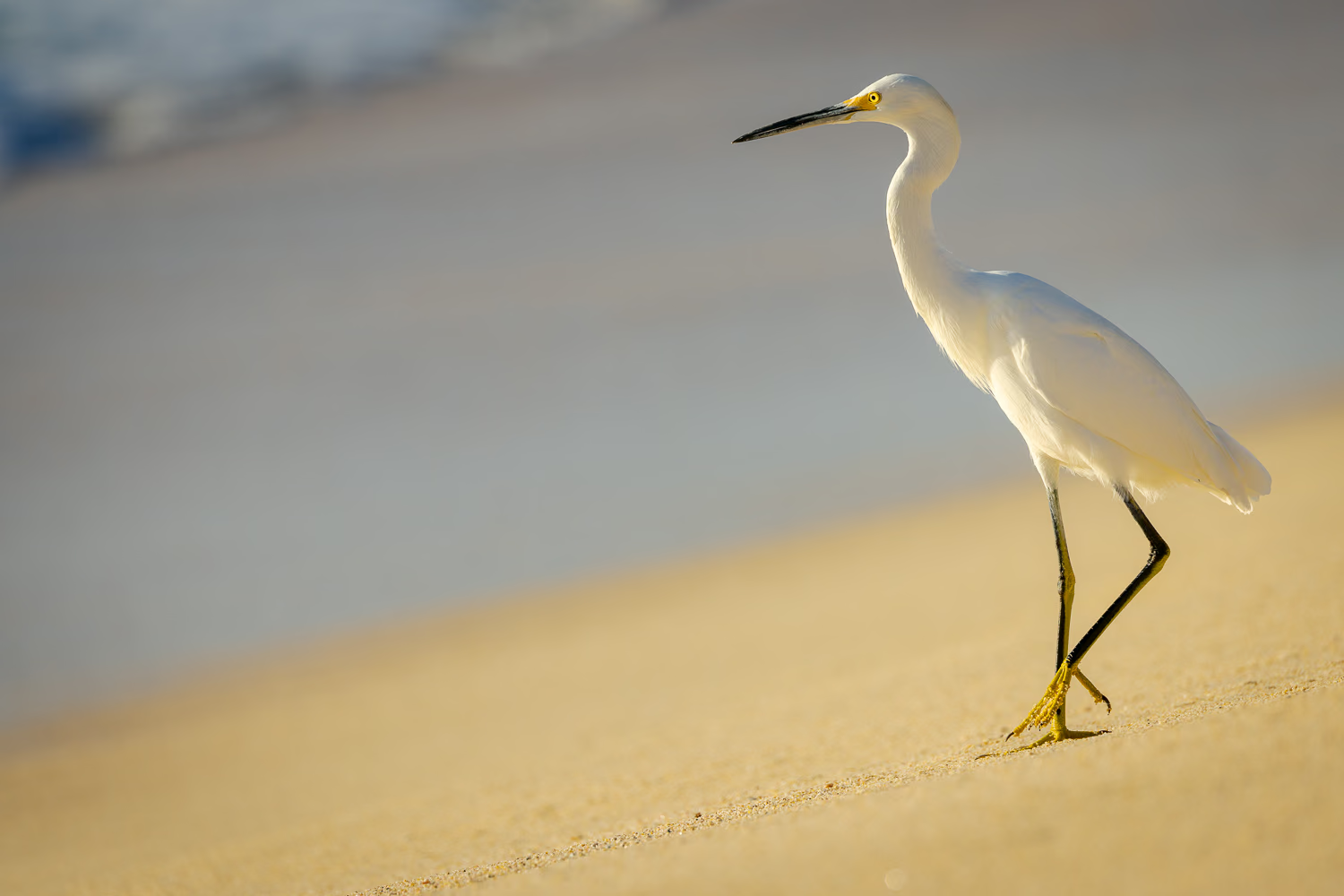
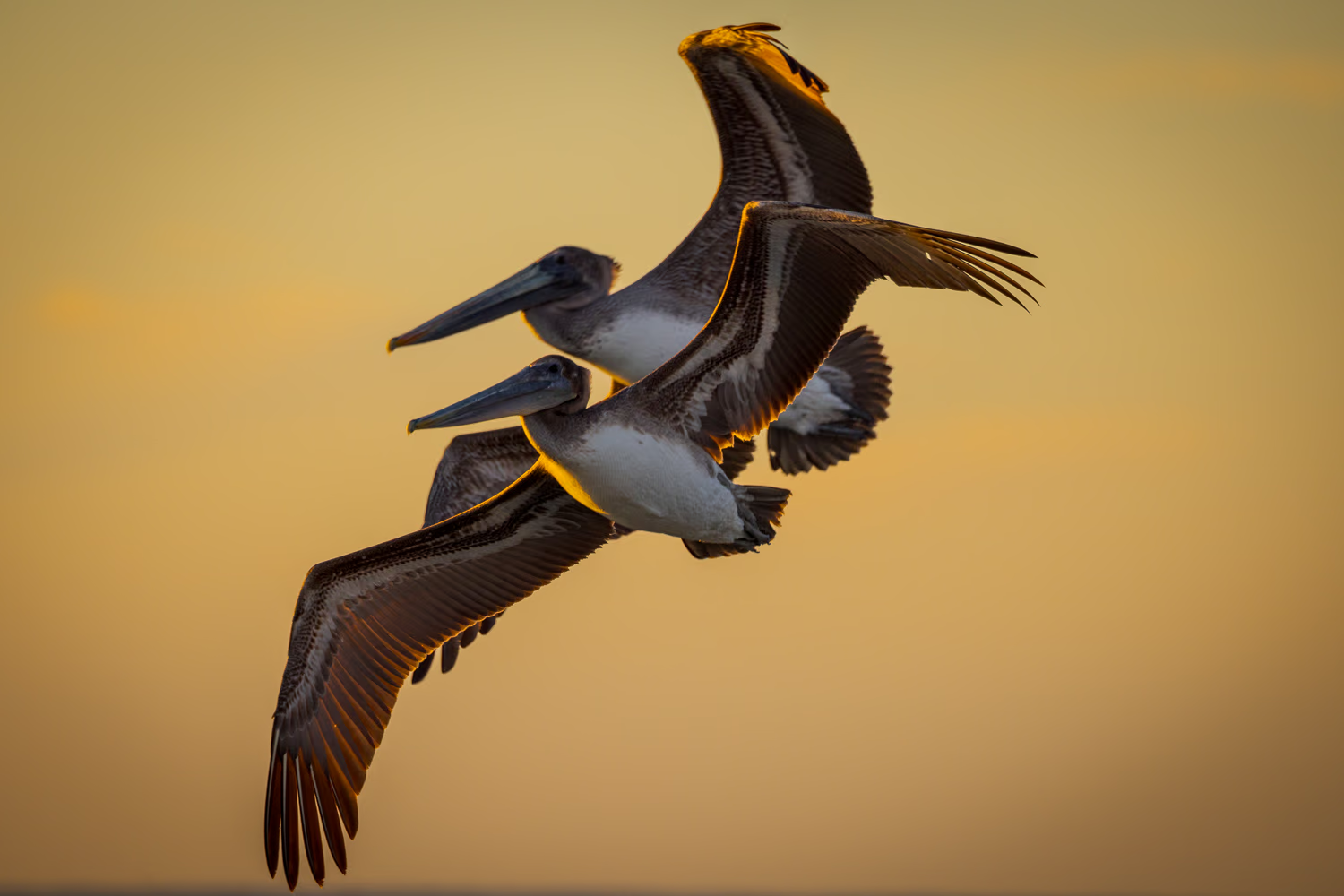
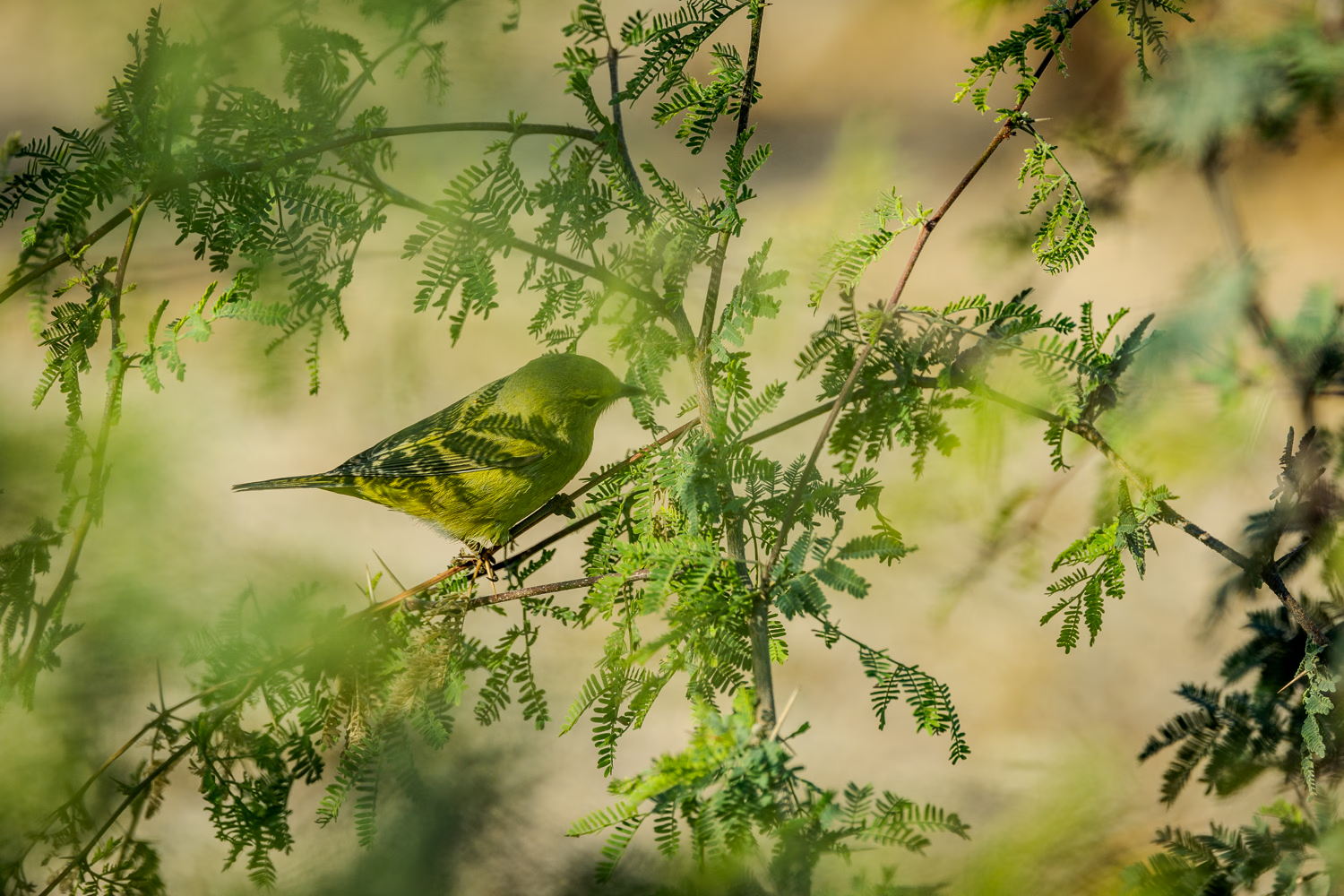
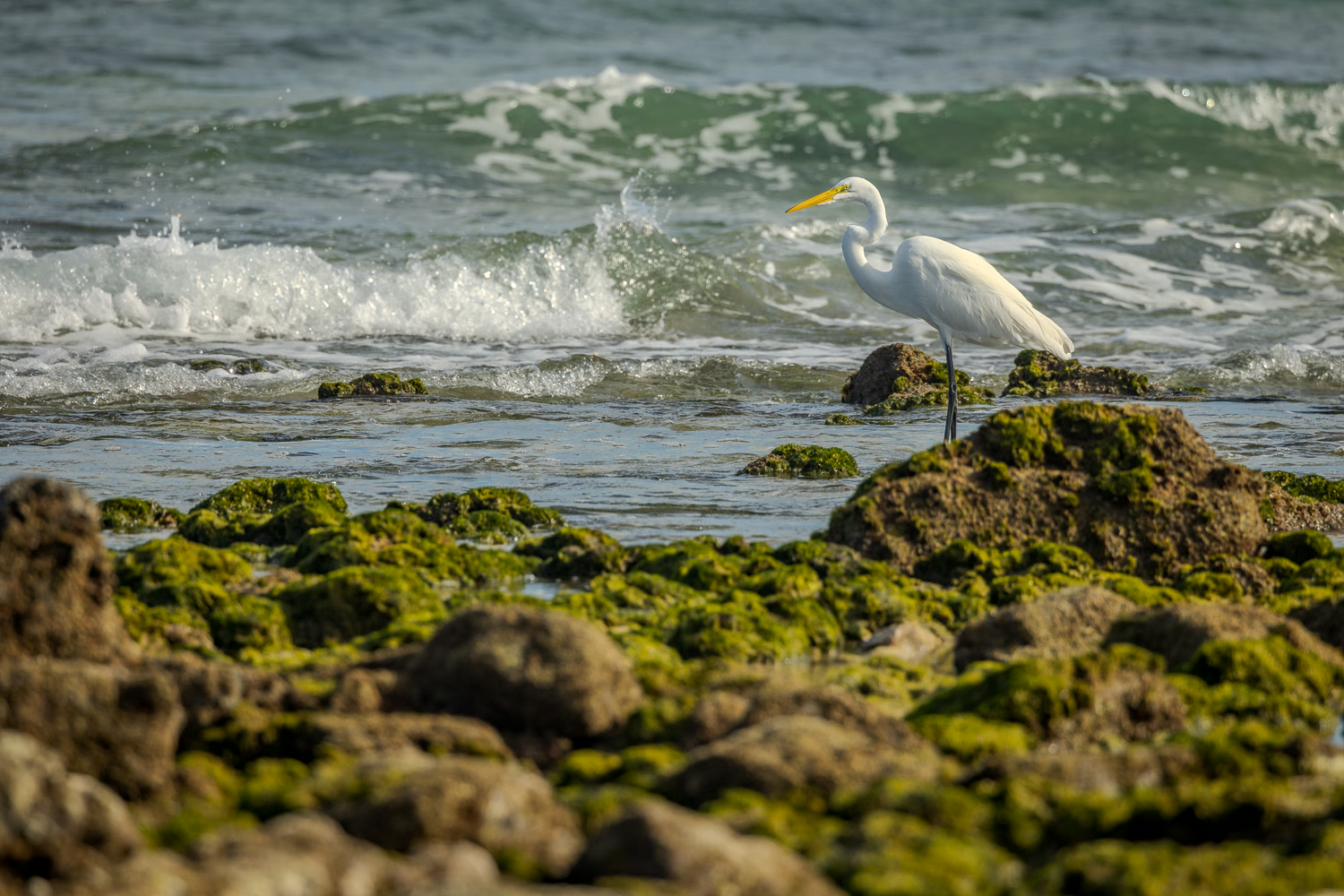
A rattlesnake that was found in our campA great egret (Ardea alba) who searches the beach for food every morningPelicans fly by each morning during sunriseShadows playing on the back of a small birdAnother great egret (Ardea alba) during low tide on the lookout for foodThe sierra stands tall in the back country of the Baja PeninsulaDonkey looking for food amongst the campersBeachdonkeyBeachcowCows of the desert in La Fortuna
Before we arrived here, I had never been on a surfboard or paddleboard. But I quickly took a liking to both. When there’s no wind (which is the case almost every morning) and the water surface is as smooth as glass, you can move freely on the water with the SUP and paddle out to sea. It’s a great way to get a full-body workout. But more than that, it’s one of the very best ways to see the humpback whales that swim past here every day. In the beginning, we paddled out to sea excitedly at almost every sign of a whale on the horizon, hoping to get closer. However, after many hours on the water and countless whale encounters, we have now become real whale-snobs. We only get excited when the animals appear very close to the coast (less than 1 km).
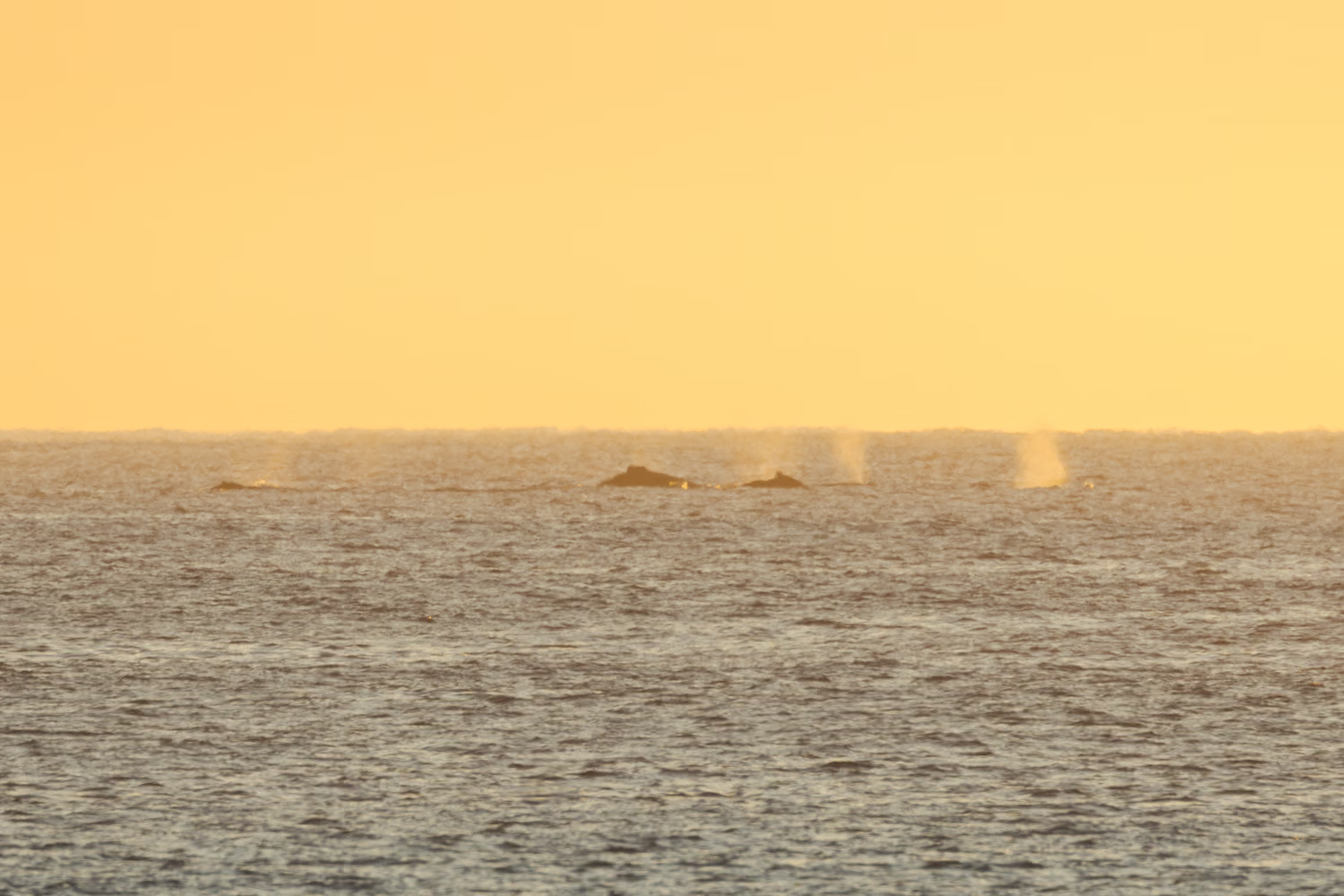
Whales on the horizon during sunriseLooking for whales on SUPsLisa paddling out to the whalesA young humpback playing, jumpingGetting close to whales became pretty commonOne time there were even dolphins swimming in front of a group of whales
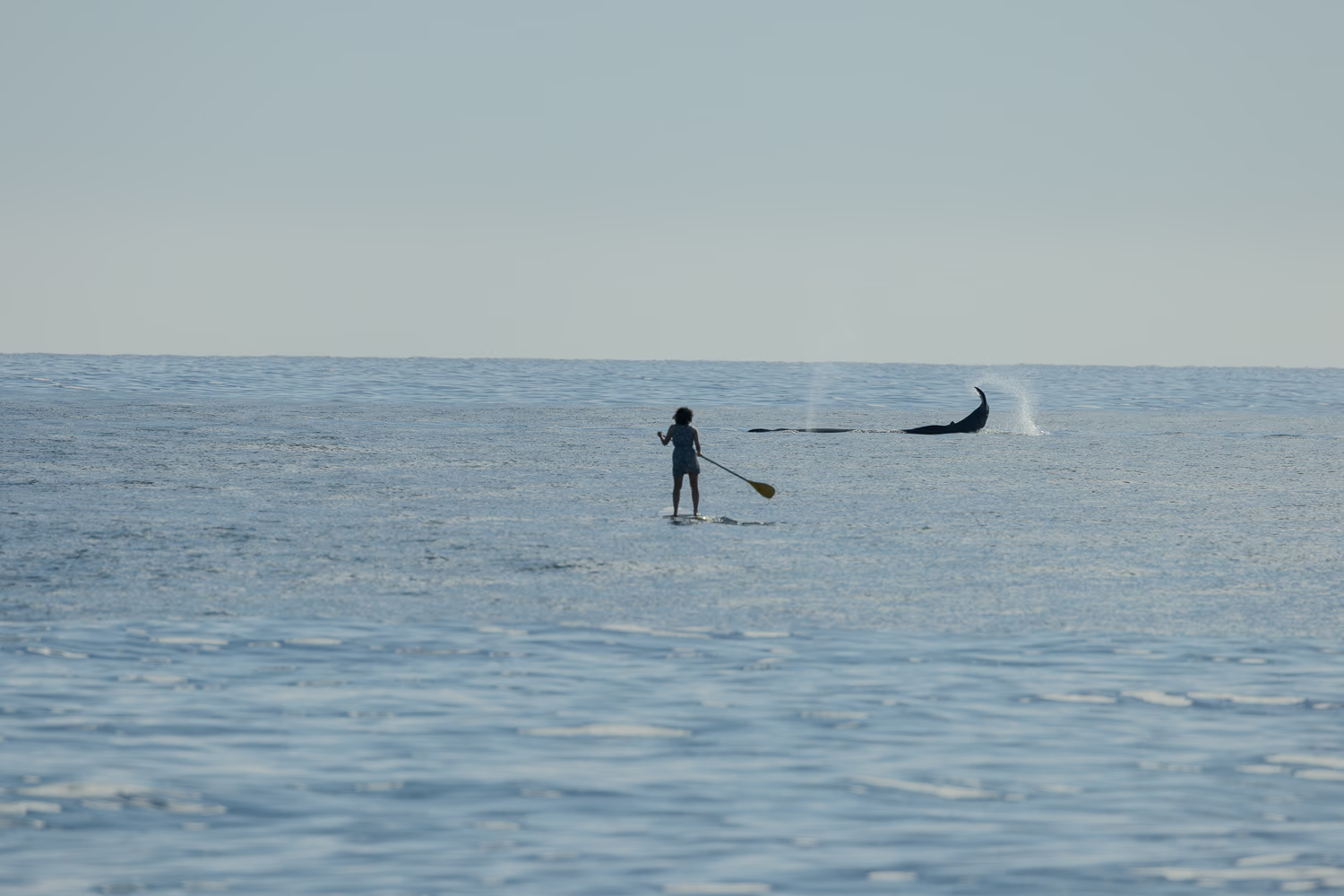
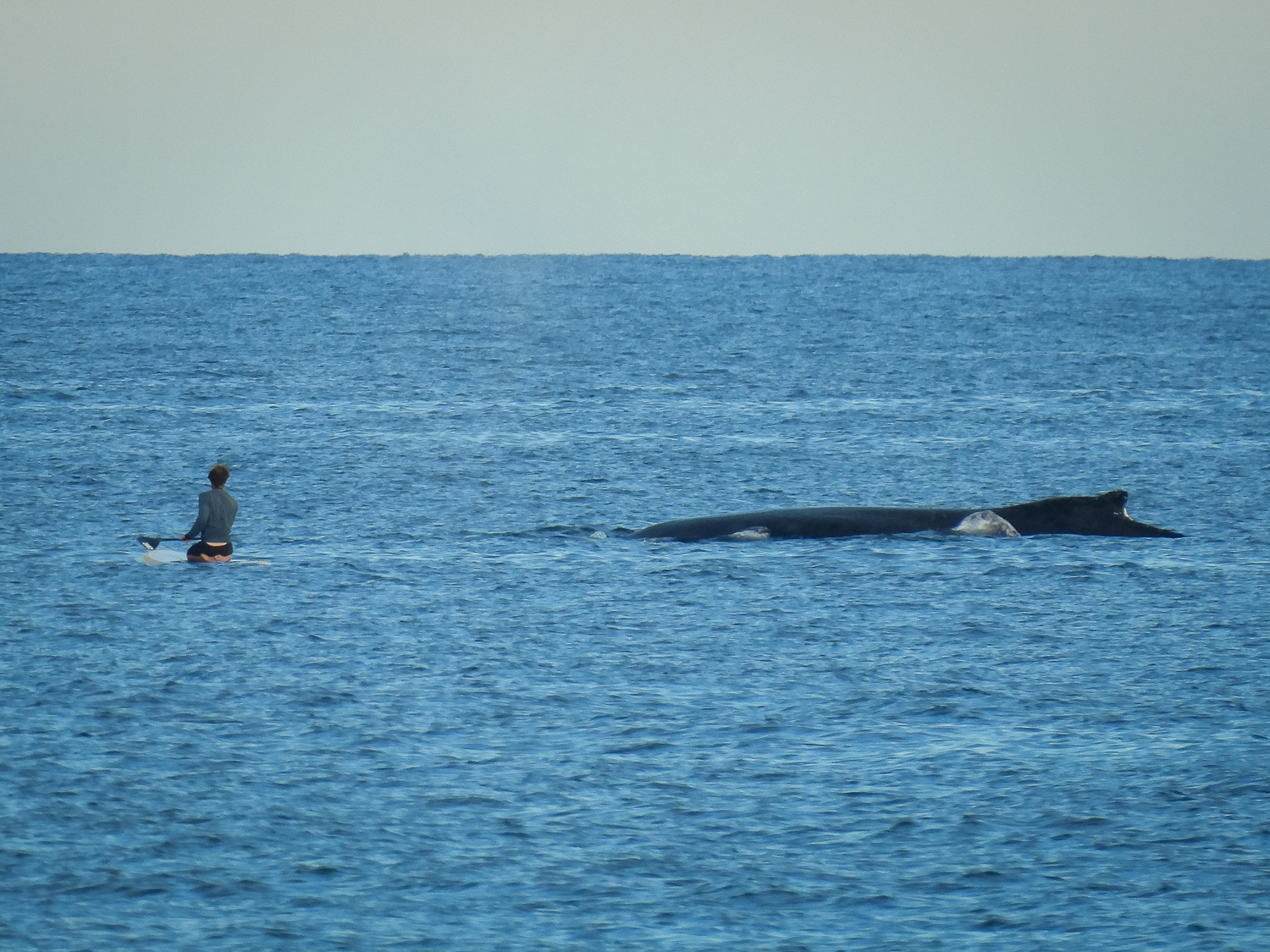
Most of the time, the whales keep a distance of several hundred meters. Even from that distance, you get a feeling for just how huge these animals are. But sometimes, with some luck, they get curious and come closer, swimming around you, seemingly inspecting you. On the SUP, that’s literally a breathtaking experience.
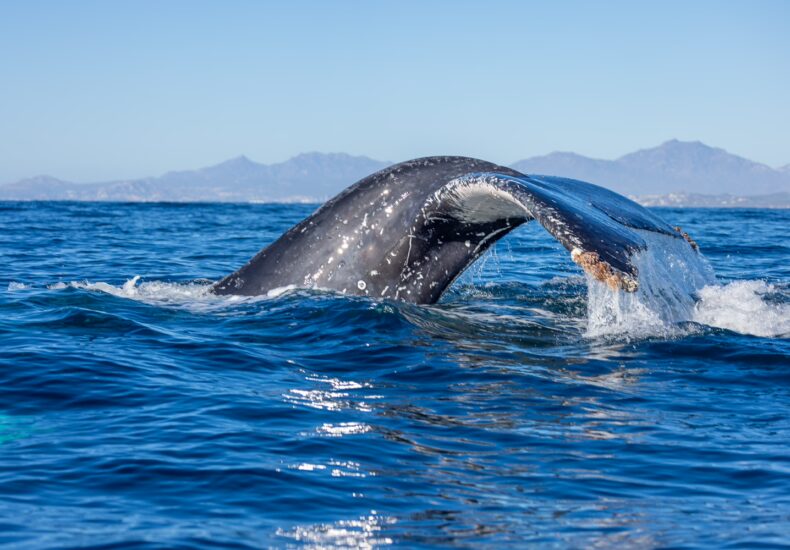
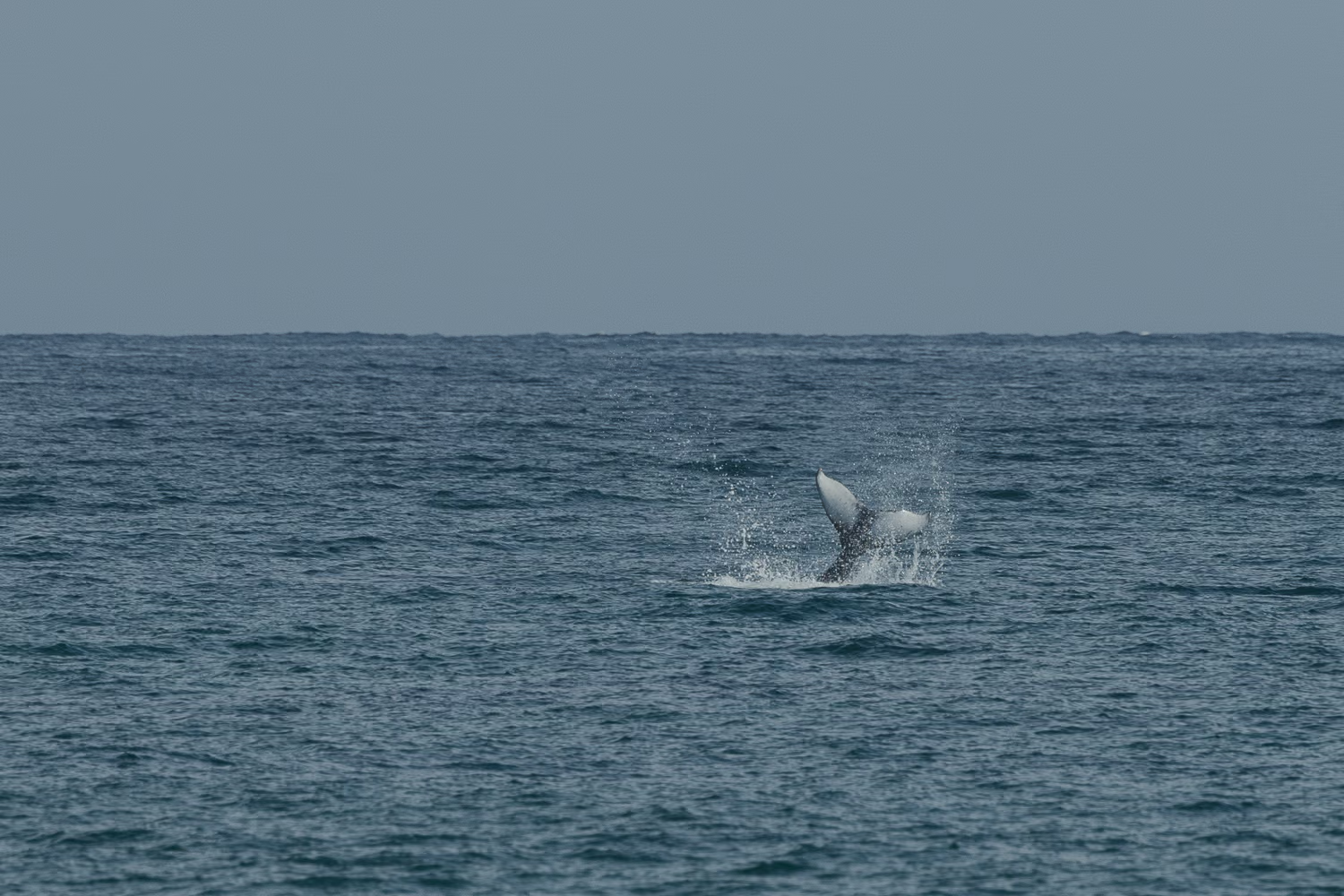
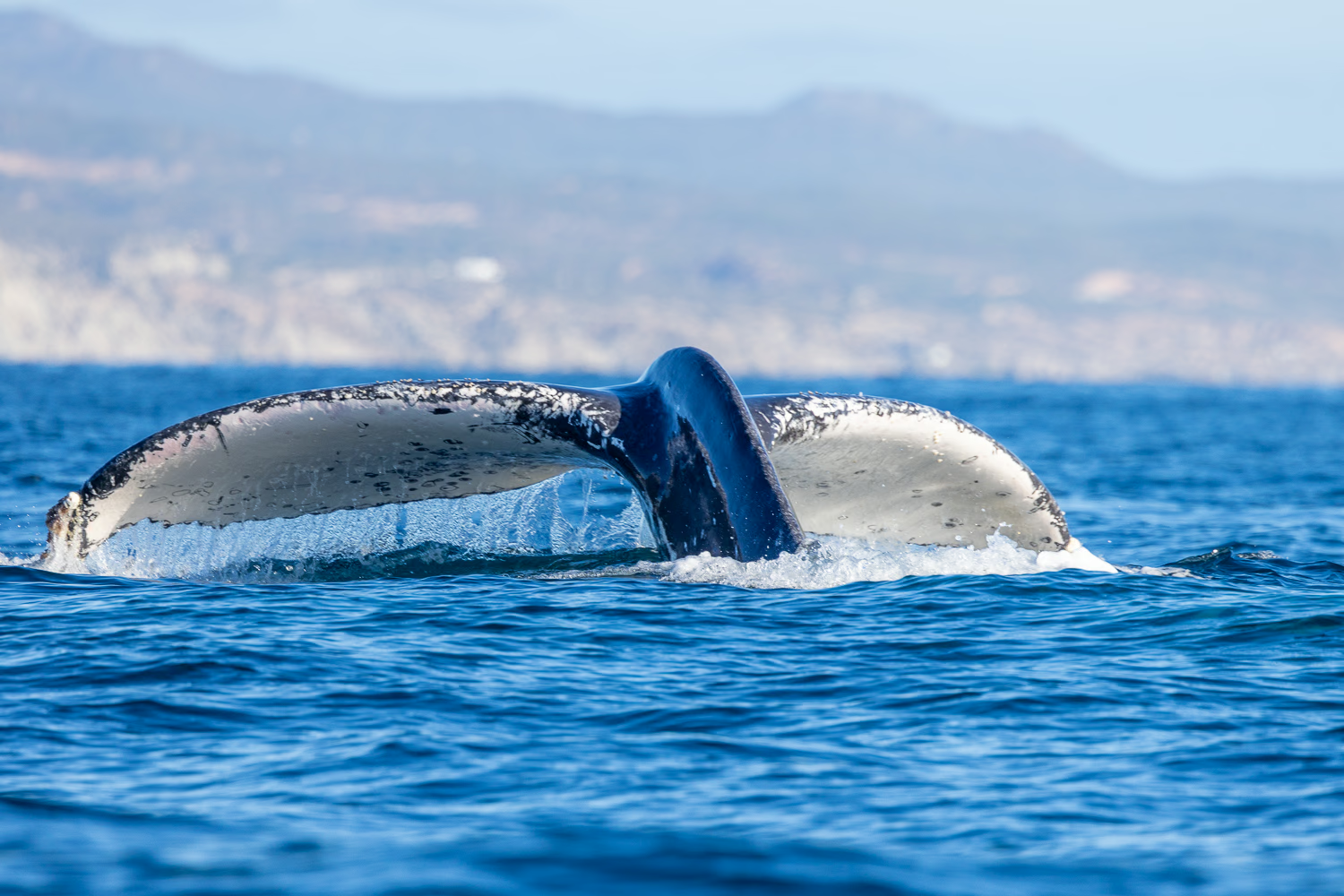
On January 1st, after a cozy New Year’s Eve, I decided to start the year on the water. So, I went down to the sea, jumped on a SUP, and began paddling. On the horizon I could see the fountains of exhaling whales and the splashes as they leapt out of the water, so I made my way toward them. About 2-3 km from shore, I was getting closer. Several pairs of mothers and calves were swimming together. One seemed to be coming closer, so I paddled a bit more in its direction. Suddenly, the calf broke through the water’s surface about 100 meters from me, leapt high into the air, slowly spun around, landed with a loud splash on its back, and finally disappeared into the depths in a huge fountain of water. A group of pelicans flew by above, as if in a movie. My heart raced – I had never seen that from so close before! And then it happened again. A few minutes passed while the whales were under water. Then, suddenly, the calf shot up through the surface again, this time only about 40 meters away. I even felt the waves from its impact make my SUP sway, and adrenaline surged through my body. So close! Suddenly, I started to feel a little scared – what if it lands on me! I had heard that these whales were very gentle and never hurt people. But when you’re kilometers away from solid ground and the nearest person, you can’t help but think about whether you want to take that risk – however small it might be. But I didn’t have much time for those thoughts. About 20 meters away from me, the massive, gray back of a giant adult humpback whale suddenly rose out of the water. It was heading directly toward me, slowly curving, and then disappeared into the dark blue depths. Right after that, its huge tail fin appeared behind it, so close that I could clearly see the barnacles growing on it. Then, with a soft, gliding sound, that disappeared into the water too. Another rush of adrenaline shot through me – the mother was coming straight toward me. If she wanted to hurt me, I was done – no chance of escaping. As I had to turn on the SUP to watch the tail fin, I lost my balance and toppled off the board with a splash, nervous as I was. Impeccable timing! Quickly I scrambled back onto the board, sat down this time to avoid losing my balance again, and started paddling hard to get out of the whale’s path. I felt like an ant drifting around on a matchstick in the ocean. But I had worried for nothing – the mother surfaced again slightly to my right and exhaled with a loud blow. That must’ve been quite amusing for her! After that, the two massive marine mammals continued to swim around me, coming close to the surface again and again. Once, I even saw the white side fin of one of the whales flash beneath me as it swam underneath. Even though nothing had happened, the thought of the whale landing on me still lingered in the back of my mind, and all the adrenaline had left me shaky and drained. Just writing about this moment makes my heart race again – the experience and the memory are so intense. As much as I would have loved to continue observing the whales, I ended our encounter by paddling back toward the coast. Somewhat relieved, I noticed they seemed to have lost interest in me and swam off to the north.
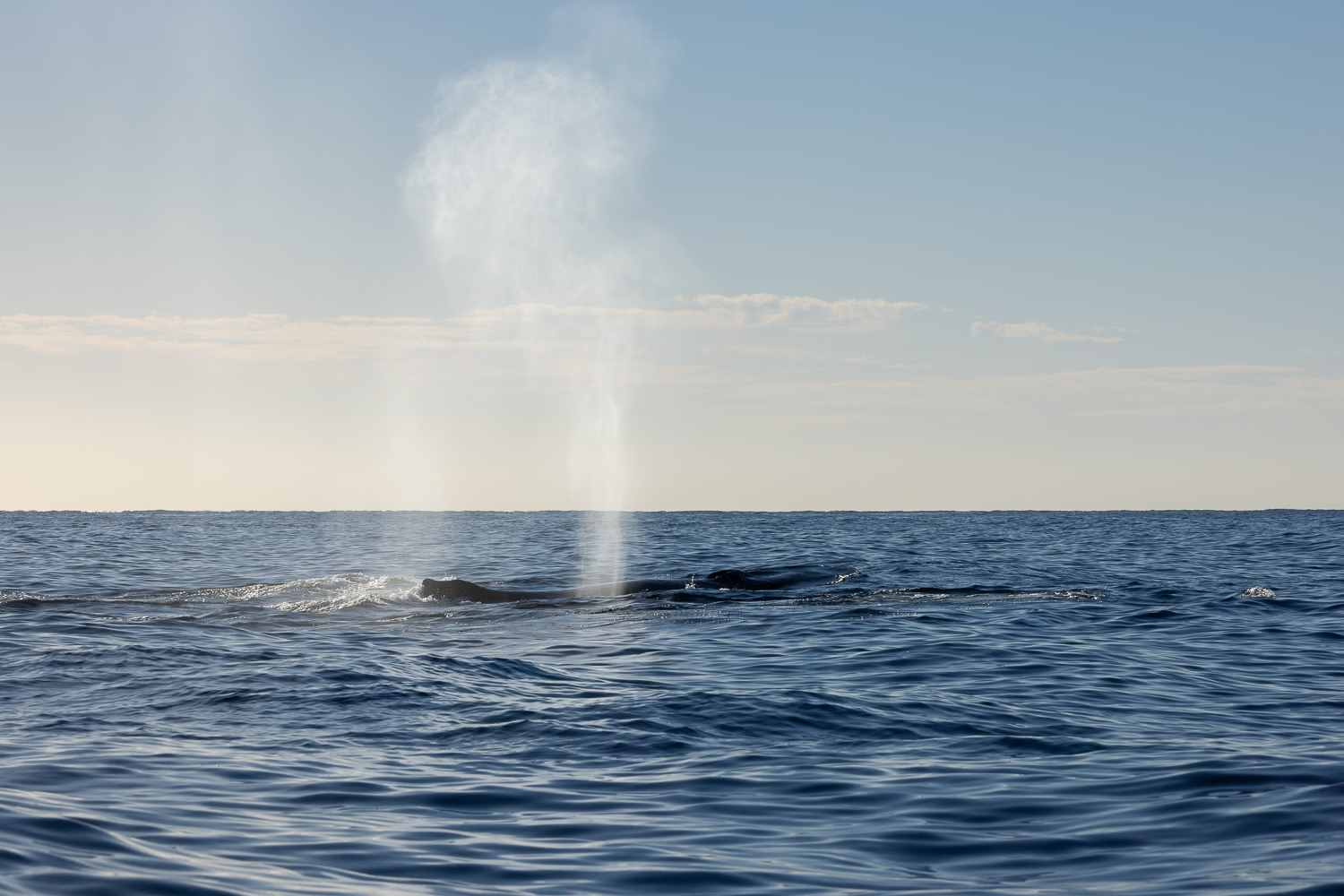
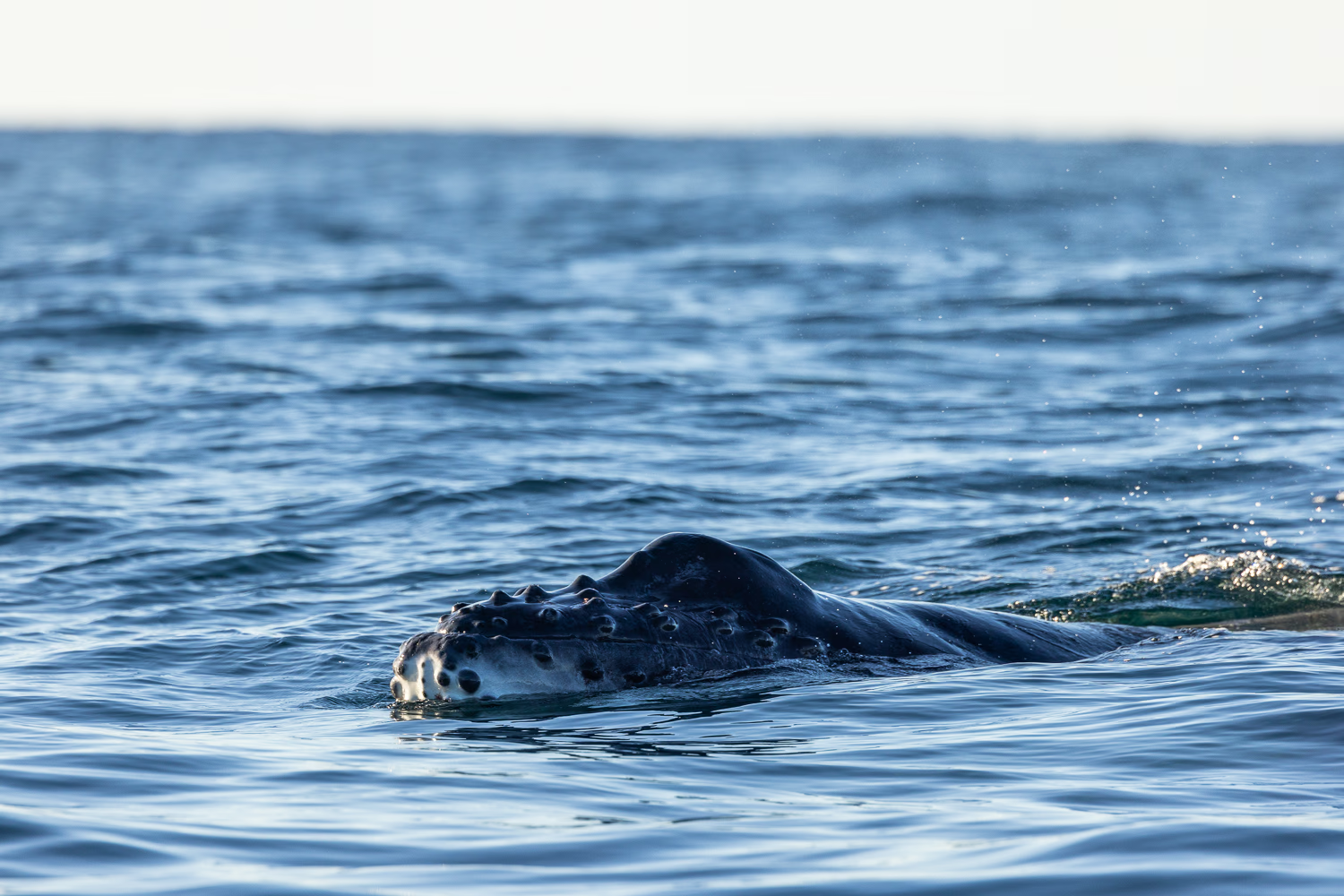
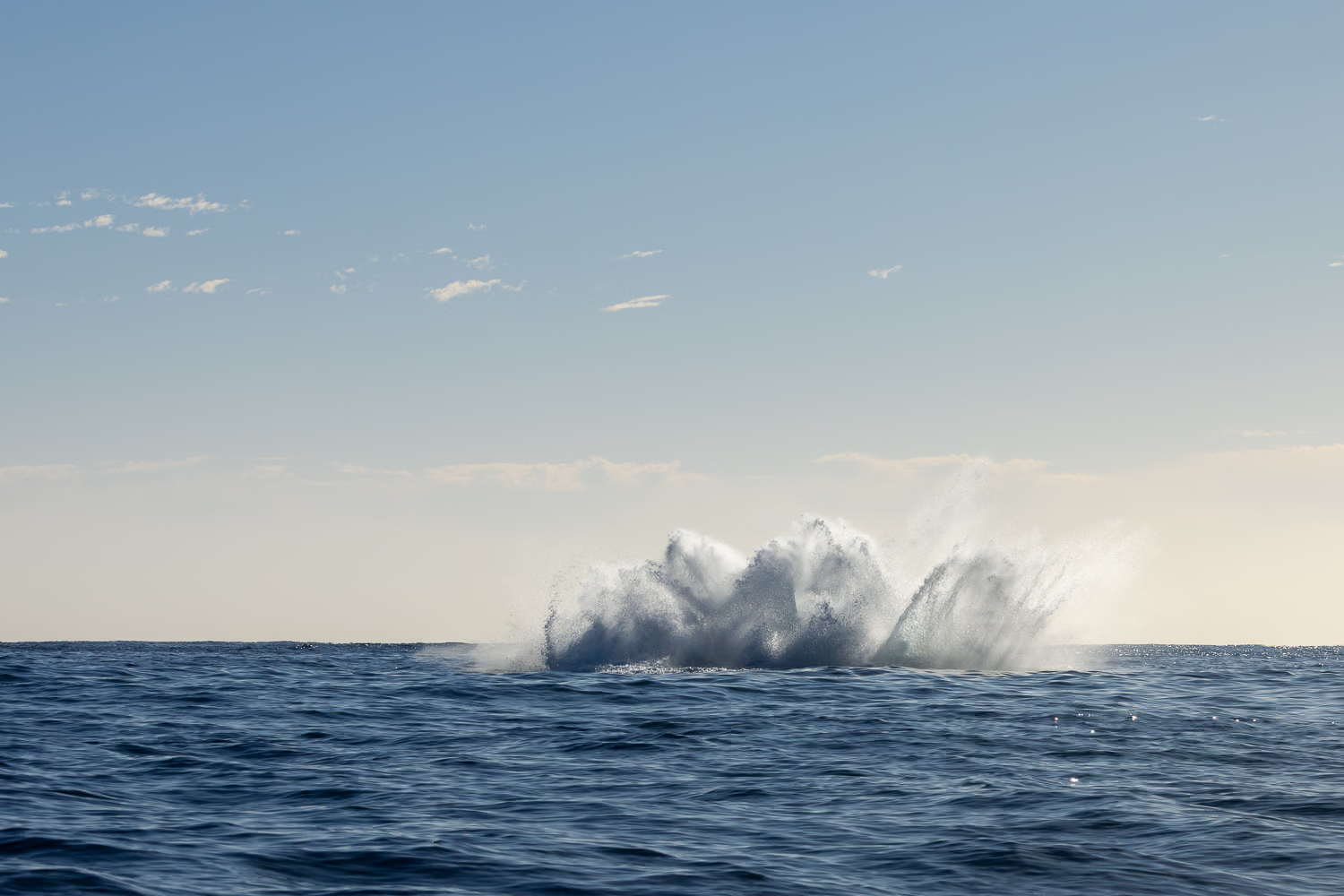
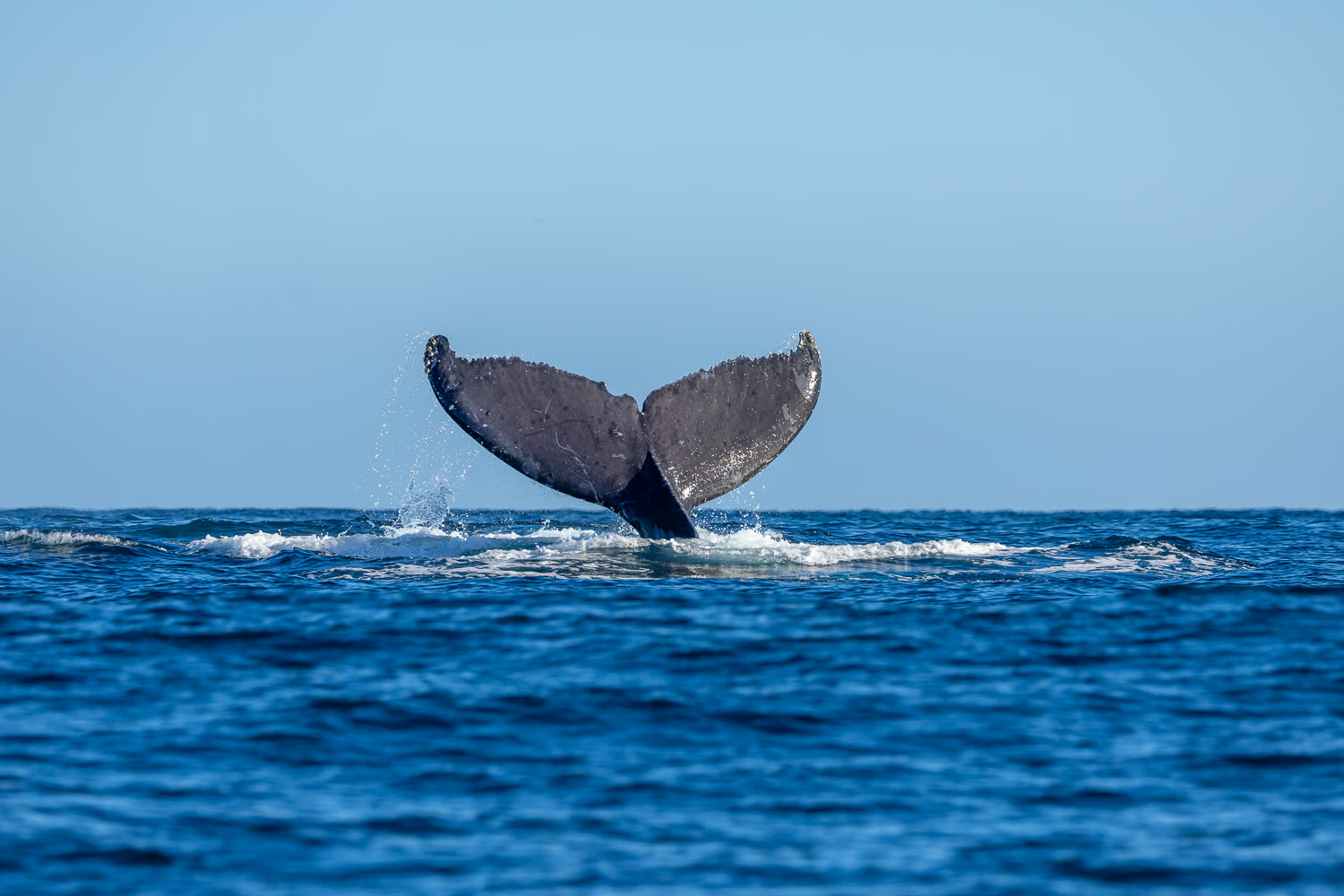
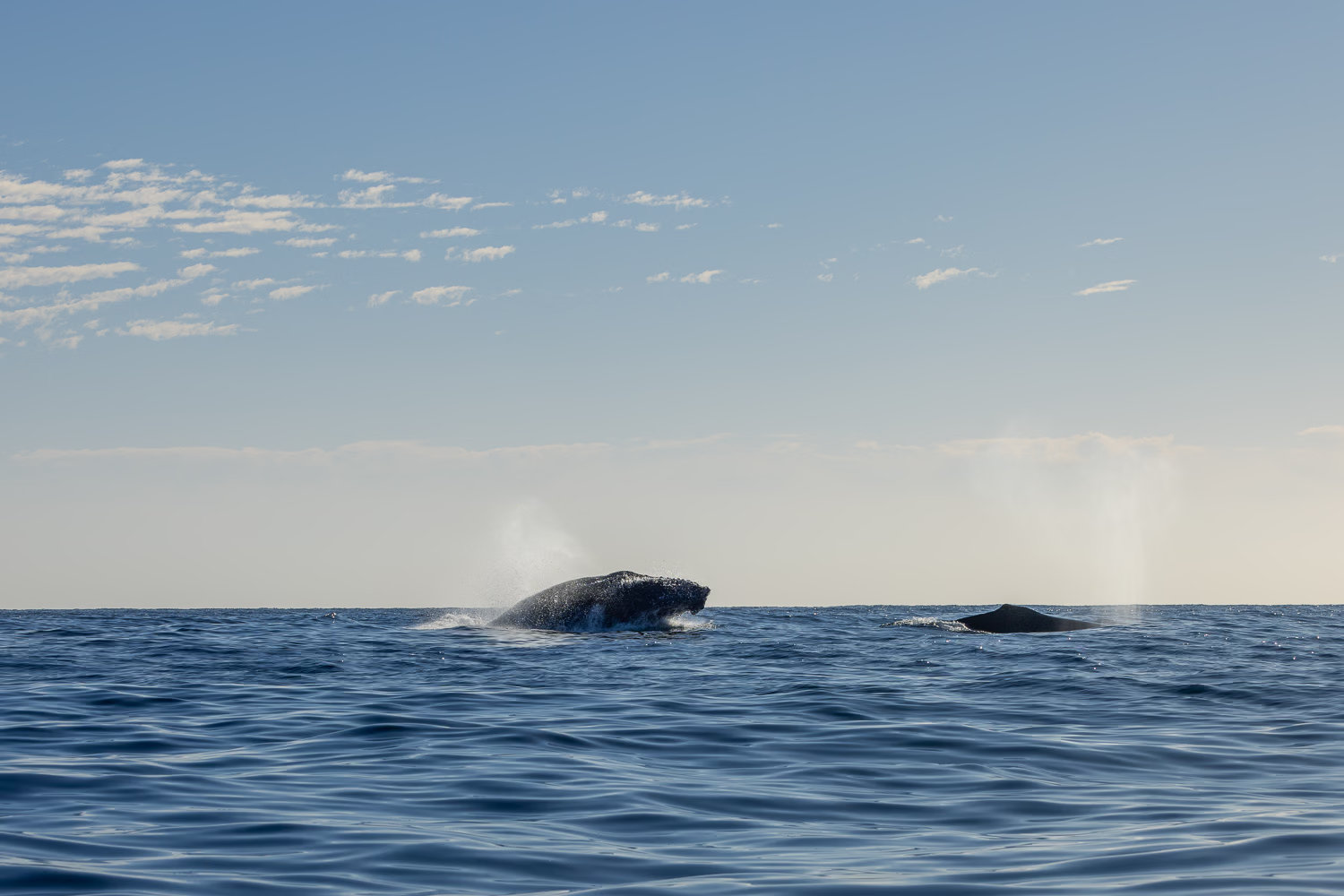
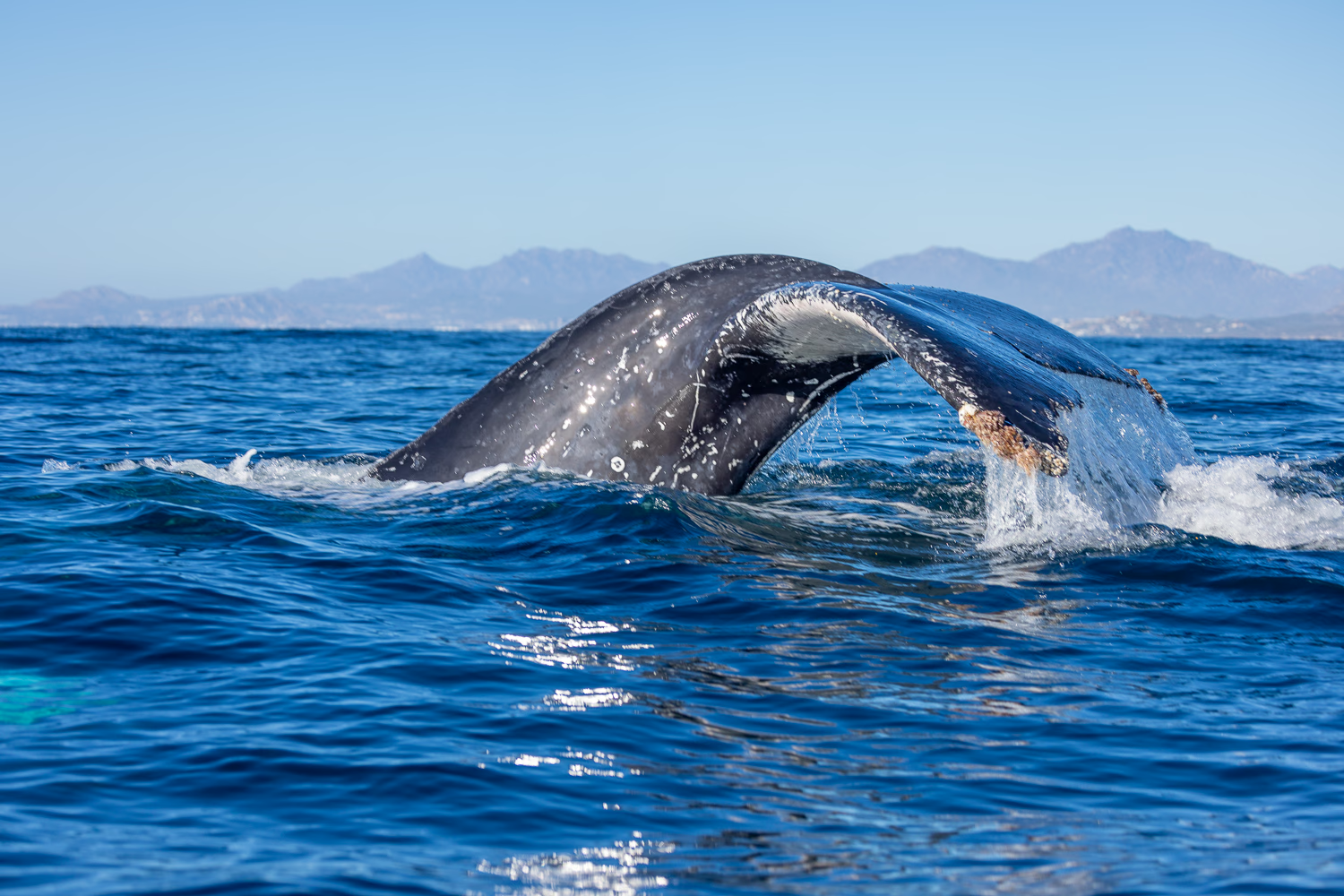
The most obvious sign of a whale close by – it’s blowholeA young humpback comes closer to check us outThe tail fin of a humpback before divingThe huge splash of a grown humpback after breachingThe size of humpback tail fins is astonishingHumpbacks jumping out of the waterA humpback diving in front of the East Cape
You may also like
Transatlantik Überfahrt
A day like any other on Utila
Dive master training in Utila
1 comment
albrecht has written:
phantastisch – schön dass ihr das erleben könnt – albrecht
 Deutsch
 English


phantastisch – schön dass ihr das erleben könnt – albrecht